

State Leadership Emerges as Washington Retreats on Climate Finance
As federal support for climate action recedes, the spotlight shifts to innovative climate finance solutions at the state and local levels. Climate finance has become a central topic for policymakers, investors, and communities seeking to address the urgent challenges of climate change. The question is no longer if we can afford to invest in climate solutions, but how we will mobilize and allocate the necessary capital for a sustainable future.
The Enormous Investment Required for Climate Action
Recent analyses estimate that the United States will need between $2 trillion and $40 trillion in new investment by mid-century to effectively tackle climate change. Transmission infrastructure alone could require upwards of $2 trillion. These massive figures underscore the scale of the challenge and the imperative for strategic climate finance. Whether action is deliberate or reactive, the capital will be spent; the key is ensuring investments are made wisely and efficiently to reduce long-term costs rather than escalate them.
Market-Driven Finance: The New Foundation
With federal policy becoming less predictable, the private sector is increasingly stepping in to fill the gap. However, not all forms of capital are equal in their resilience. Policy-dependent financing often retreats in uncertain times, while cash-flow-driven investments endure. The most durable climate finance structures rely on predictable, long-term revenue streams. For example, green bonds backed by municipal or utility obligations continue to attract significant capital, as do energy performance contracts that finance public building upgrades through verified energy savings. Similarly, renewable energy projects underpinned by long-term power purchase agreements provide the steady income that institutional investors seek.
These financial mechanisms are not swayed by political ideology but are grounded in mathematical certainty and contractual obligations. As a result, they offer greater stability in the face of shifting policy landscapes.
The Limits of Market-Driven Approaches
While market-driven climate finance brings resilience and scale, it does not automatically ensure equity. Capital naturally flows to projects with the most predictable returns, which may not align with the communities most in need. Without intentional design, the transition to a clean energy economy risks deepening existing disparities. Investments often concentrate in areas with higher creditworthiness and newer infrastructure, while vulnerable communities with older housing and higher energy burdens may be left behind.
Projects like community-scale solar in low-income neighborhoods or building retrofits in aging housing stock are frequently overlooked—not due to lack of value, but because traditional financial metrics fail to capture their full benefits. This highlights the need for financial models and public policies that prioritize both durability and equity.
The Role of State Leadership in Advancing Climate Finance
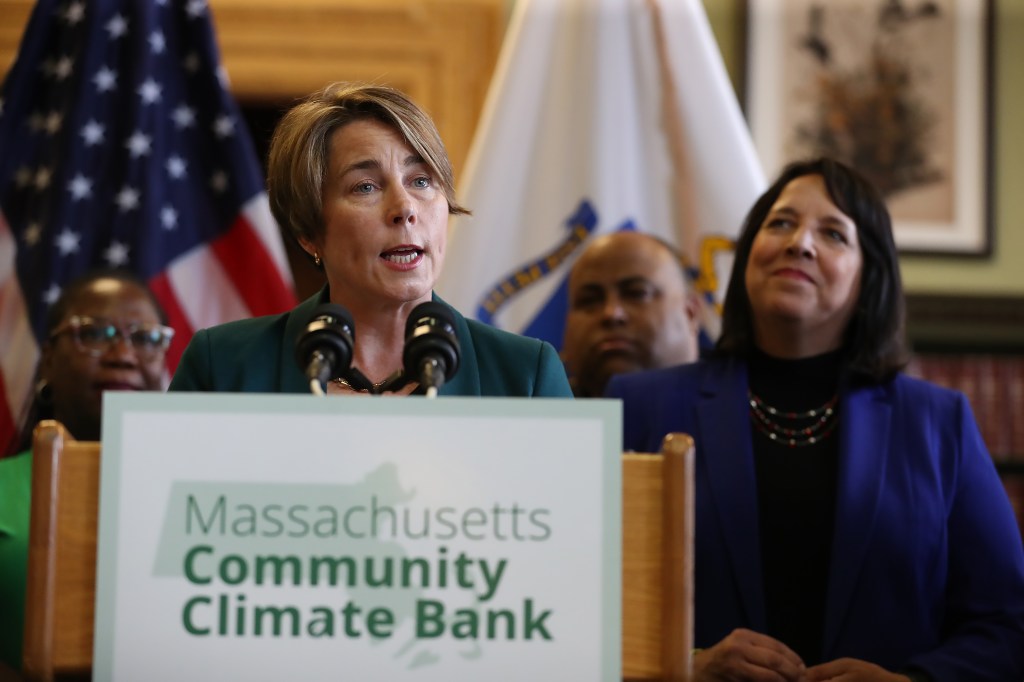
States like Massachusetts are stepping up as national leaders in climate policy and environmental justice. Under Governor Maura Healey, Massachusetts has prioritized innovative financing models grounded in real, contracted cash flows—such as energy savings, power sales, and utility payments—that attract private capital at scale. Treating transmission infrastructure as an investable asset, rather than a regulatory afterthought, is another strategic shift. Federal analyses indicate that every dollar invested in transmission can yield up to $1.80 in system savings, showcasing the strong economic case for such investments.
Expanding the role of green banks and revolving loan funds can further leverage limited public dollars to unlock much larger pools of private investment. Connecticut’s Green Bank, for example, has successfully scaled this model, transforming modest public contributions into billions in clean energy financing.
Metrics, Transparency, and Accountability
Effective climate finance requires more than just capital. Metrics that go beyond upfront costs—such as avoided fuel expenses, improved grid reliability, public health benefits, and climate resilience—must be integrated into procurement decisions. These broader metrics often elevate projects that deliver significant social and economic value. Transparency is equally vital: public dashboards tracking emissions reductions, bill savings, job creation, and local impacts can help communities see tangible outcomes from climate investments, fostering durable public support that transcends political cycles.
Aligning Markets and Policy for a Resilient Future
The path forward in climate finance is not a choice between markets and policy, but a strategic alignment of both. Markets provide scale and efficiency, while policy ensures direction, accountability, and equity. When these forces are synchronized, they create systems that are both resilient and inclusive. The transition to a clean energy economy is inevitable; the real challenge lies in building financial structures that attract stable, market-based capital while ensuring benefits are broadly shared and not subject to political volatility.
This article is inspired by content from Original Source. It has been rephrased for originality. Images are credited to the original source.