

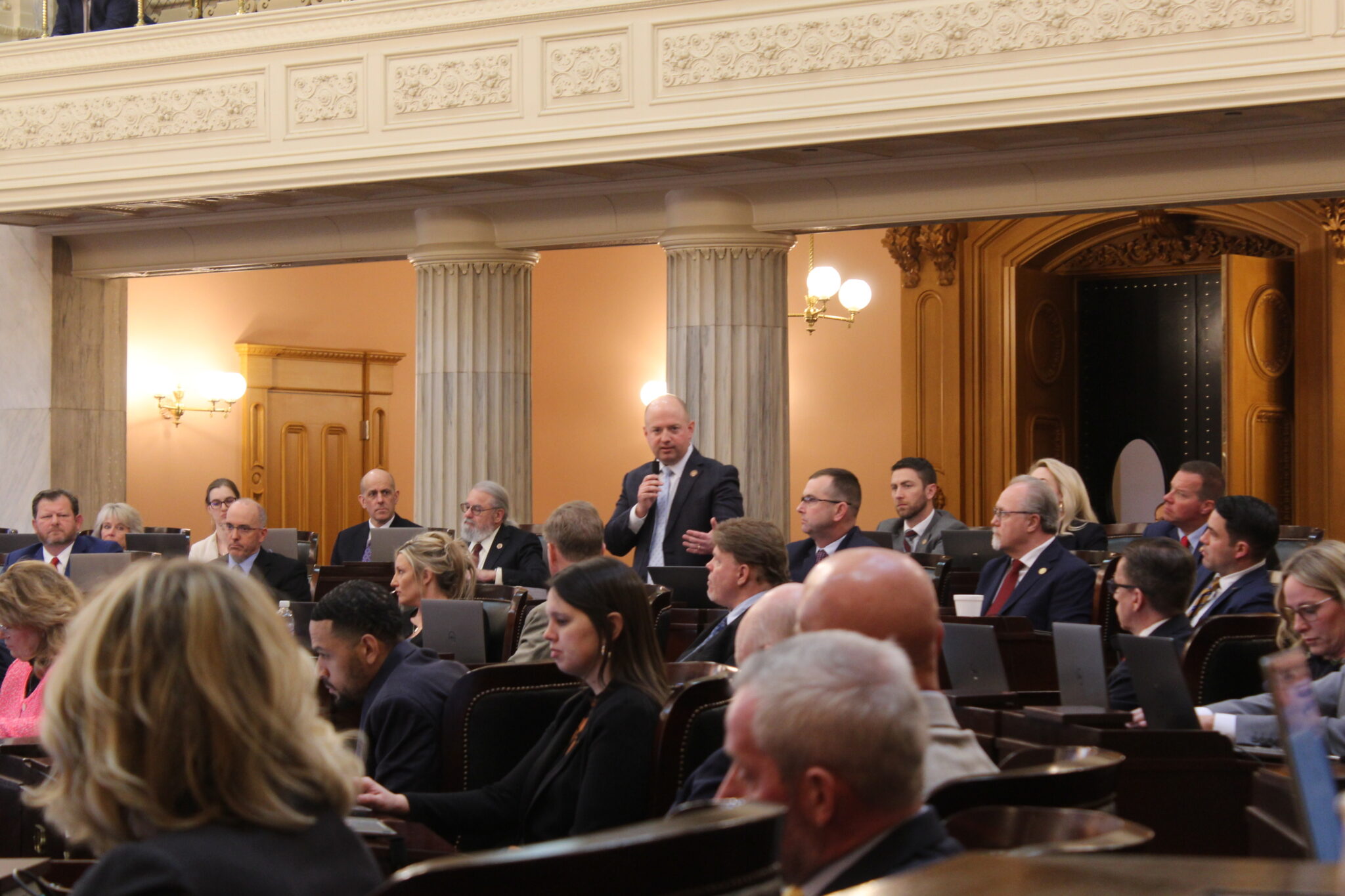
Ohio House’s Latest Budget Proposal to Dismantle Ohio Election Commission
Evaluating the Impact on Campaign Finance Enforcement
The Ohio House’s latest budget proposal aims to dismantle the Ohio Election Commission, the agency responsible for enforcing state campaign finance laws. The commission’s responsibilities could soon fall under the purview of the Secretary of State or county boards of elections if lawmakers succeed in pushing their sweeping amendment through a 5,000-page budget bill.
Frustrations Surface
State Rep. Brian Stewart, R-Ashville, has been an outspoken critic of the commission, labeling its processes as ‘substantially broken’ during a February hearing. His dissatisfaction partly stems from a personal case that took the commission three years to resolve, only for the challenger to appeal after a no-violation ruling.
Critics, while acknowledging the commission’s inefficiencies, argue these drastic changes should be more thoroughly vetted in a standalone bill. The Ohio Elections Commission currently operates on an annual budget of around $642,000. Ohio’s governor had proposed increasing this to over $800,000 to fund improvements like a new filing system and additional staff.
Concerns Over Process and Independence
Stewart and state Rep. Jean Schmidt, R-Loveland, have voiced concerns over prolonged case durations that cost time and money. Despite lawmakers’ complaints, they are not altering campaign finance laws but seeking more efficient enforcement.
Chris Hicks, a Republican who frequently files complaints with the commission, has expressed frustration over the inserted budget changes, bypassing standard legislative processes. Similarly, Catherine Turcer of Common Cause Ohio, while critical of the commission’s current state, believes eliminating it entirely would lead to cronyism, considering county boards and state officials as inherently partisan actors.
Potential Impact
Phil Richter, Executive Director of the Ohio Elections Commission, warns that removing the independent body might allow partisan claims to influence decisions, highlighting the separation of powers as crucial for impartial oversight. He suggests that having 88 separate county boards interpret campaign finance laws could bring chaos.
Lawmakers like Stewart argue that the current system is inefficient, with unqualified individuals making key decisions over extensive periods. They believe reallocating these duties could bring about needed reform.
Follow related updates and get the latest in finance news at fintechfilter.com.