

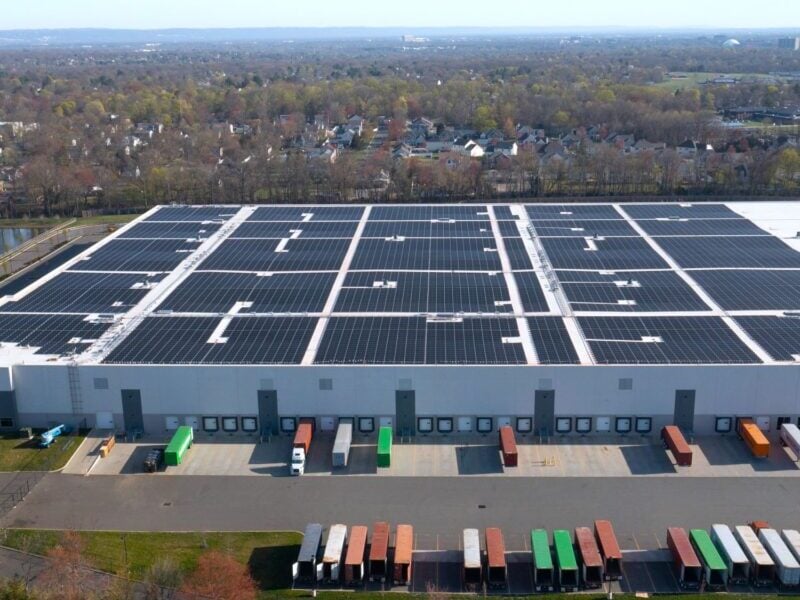
Dimension Energy Secures Major Investment for Solar Expansion
Dimension Energy has successfully obtained $360 million in financing to support the development of a 112MW portfolio of community solar projects across six U.S. states. The funding includes $170 million in tax equity from Advantage Capital, a significant investor in renewable energy initiatives.
Tom Bitting, managing director at Advantage Capital, emphasized the broader impact of the investment, saying, “This investment will strengthen local energy grids, create good-paying jobs, and expand access to lower-cost power in communities across the country.”
The community solar model has gained traction in recent years, offering a way to deliver renewable energy without overburdening local grids. According to the U.S. Energy Information Administration (EIA), curtailments of solar and wind energy resources in California increased by 29% between 2023 and 2024. These curtailments point to an overwhelmed grid system that is struggling to integrate increasing levels of renewable energy.
Community Solar Growth Continues in the U.S.
In 2024 alone, the U.S. saw a record addition of 1.7GW of new community solar capacity, representing a 35% year-over-year increase. The majority of these installations occurred in Illinois, New York, and Maine, which collectively accounted for more than two-thirds of the new capacity.
Dimension Energy has positioned itself as a leader in this growing sector. Earlier this year, the company expanded its corporate credit facility to develop a 3.5GW pipeline of community solar projects. These projects aim to increase access to clean energy in both urban and rural areas while promoting economic development and grid resilience.
Setback in Montana: Governor Vetoes Community Solar Bill
Despite the momentum, not all states are moving in the same direction. In Montana, Governor Greg Gianforte recently vetoed Senate Bill 188, legislation designed to formalize the connection process for community solar projects to the state’s power grid. The bill had been introduced by Democratic Senator Christopher Pope and passed with overwhelming bipartisan support—46 to 4 in the Republican-majority Senate.
The bill aimed to require public utilities to connect qualifying community solar projects to the grid. It also proposed that project owners would cover administrative costs, while customers could receive “on-bill credits” to help offset installation expenses.
However, Governor Gianforte expressed concerns over the bill’s implementation. “In several states, including Minnesota, New York and Oregon, shared solar facilities receive arbitrarily favourable credit rates based on non-economic considerations, such as purported benefits to the environment,” he stated. “It is impossible to predict how the Public Service Commission will proceed with implementing Senate Bill 188.”
Industry Reacts to Montana Veto
The veto has sparked widespread disappointment among solar advocates. Organizations like the Coalition for Community Solar Access (CCSA) and the Montana Renewable Energy Association (MREA) released a joint statement expressing their dismay: “SB 188 represented a meaningful step toward a more affordable, resilient and diversified energy future for Montana.”
The groups said the bill would have expanded energy choices for families, small businesses, and farmers, especially in rural areas. They also highlighted the collaborative efforts taken by developers to address regulatory concerns. “In a formal letter to the PSC, the developer community voluntarily outlined clear guardrails for the program—including support for cost containment and a pledge to advocate for solely economic considerations in future rulemakings,” the statement read.
Montana’s Solar Outlook Remains Modest
Montana currently has one of the smallest solar markets in the U.S., with only 329MW of installed capacity as of the first quarter of 2024. Despite the recent setback, the Solar Energy Industries Association (SEIA) projects that the state could add up to 1.7GW of new solar capacity over the next five years.
While the governor’s veto represents a hurdle in the state’s solar development, the overall national trend suggests a bright future for community solar. With substantial investments like those from Dimension Energy and Advantage Capital, the sector continues to grow, offering cleaner, more affordable energy options for communities across the country.
This article is inspired by content from PV Tech. It has been rephrased for originality. Images are credited to the original source.