

France’s Credit Downgrade Signals Economic and Political Strain
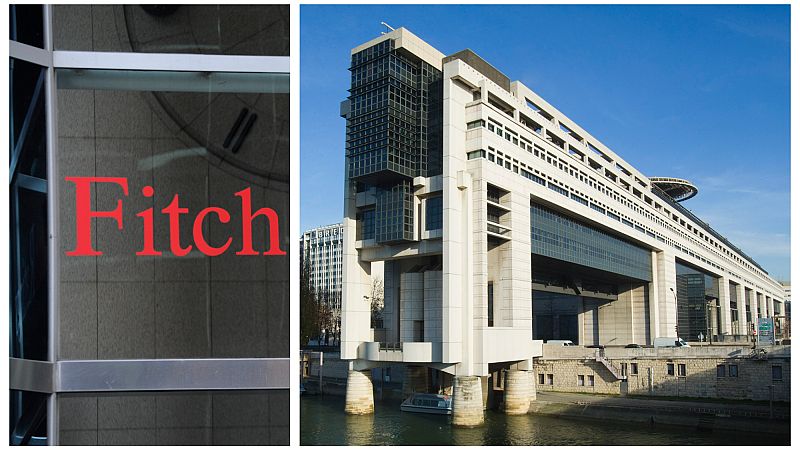
Fitch Ratings has lowered France’s credit score from “AA-” to “A+”, citing growing political instability and an escalating debt crisis. The move intensifies pressure on President Emmanuel Macron and newly appointed Prime Minister Sébastien Lecornu, as the government grapples with the fallout from a series of political upheavals and fiscal challenges.
According to the U.S.-based agency, France’s public debt is expected to rise from 113.2% of GDP in 2024 to 121% by 2027, with no clear path toward stabilization. The downgrade follows the collapse of the previous government led by François Bayrou, who lost a confidence vote due to his unpopular austerity-driven budget proposal. Bayrou’s plan included slashing two national holidays to reduce public spending.
Political Instability Undermines Fiscal Strategy
Fitch’s assessment points to the inability of the current political climate to support meaningful fiscal reforms. The report notes that successive government collapses since the 2024 snap parliamentary elections have weakened France’s capacity to implement effective budget measures. The agency is skeptical that the public deficit will fall below 3% of GDP by 2029, a key target previously set by Bayrou.
“France’s rising public indebtedness constrains its ability to respond to new economic shocks,” Fitch stated, forecasting continued political deadlock through the 2027 presidential election. The agency warns that political gridlock will likely delay necessary fiscal consolidation efforts.
Economic Impact and Investor Sentiment
The credit downgrade may signal to investors a potential increase in French bond yields and borrowing costs, particularly for property loans. However, financial experts interviewed by Euronews suggest that the immediate impact on interest rates should remain limited, as the downgrade had been anticipated.
France’s Minister of Economics and Finance, Eric Lombard, acknowledged the downgrade but emphasized the resilience of the French economy. “The new Prime Minister has initiated consultations with parliamentary forces to adopt a national budget and continue efforts to restore public finances,” Lombard said on social media platform X.
Fiscal Challenges Amid Social Discontent
Senior economist Hadrien Camatte of Natixis CIB noted that France’s deficit, projected at 5.8% of GDP in 2024, is among the highest in the EU. “Fiscal consolidation is difficult amid political fragmentation and social unrest,” Camatte said, though he highlighted France’s diversified economy, strong household savings, and favorable demographics as key strengths.
Economist Sylvain Bersinger, founder of Bersingéco, echoed concerns over the shrinking fiscal space. “While France still has room to maneuver, that space is rapidly narrowing. Breaking the political impasse and passing a budget that reduces the deficit is essential,” he emphasized.
France’s Economic Outlook Offers Mixed Signals
Despite the downgrade, some economic indicators remain positive. Inflation in France is among the lowest in the EU, and the unemployment rate has held steady at 7.5%, up just 0.1% from the previous year. According to the French statistics office INSEE, GDP is expected to grow by 0.8% in 2025, slightly exceeding earlier forecasts.
Fitch noted that while France is only moderately exposed to U.S. trade, indirect effects from recent 15% U.S. tariffs on EU goods could dampen growth. However, domestic demand may help buffer these impacts. “France’s high household savings and strong corporate balance sheets should support consumption and investment, especially in the current low-inflation environment,” the report stated.
France in the Context of the Eurozone
France remains the third most indebted nation in the eurozone, trailing only Greece and Italy. In contrast, countries like Germany and the Netherlands retain top-tier credit ratings. “Southern European countries still have lower ratings overall, particularly Italy due to its debt levels and the legacy of the sovereign debt crisis,” said Camatte. “However, the outlook for those countries is more optimistic than for France.”
Rival ratings agency S&P Global is set to release an updated outlook on France in November. Notably, the EU lacks its own accredited agency for rating member states’ debt due to disagreements over evaluation criteria among the 27 member nations.
This article is inspired by content from Original Source. It has been rephrased for originality. Images are credited to the original source.