

EU Considers New Financing Strategy for Ukraine
As the war in Ukraine stretches on, the European Union is actively exploring innovative financial strategies to support Kyiv beyond 2025. With the United States signaling a potential reduction in funding, the EU is examining the feasibility of a ‘reparations loan’ backed by frozen Russian assets.
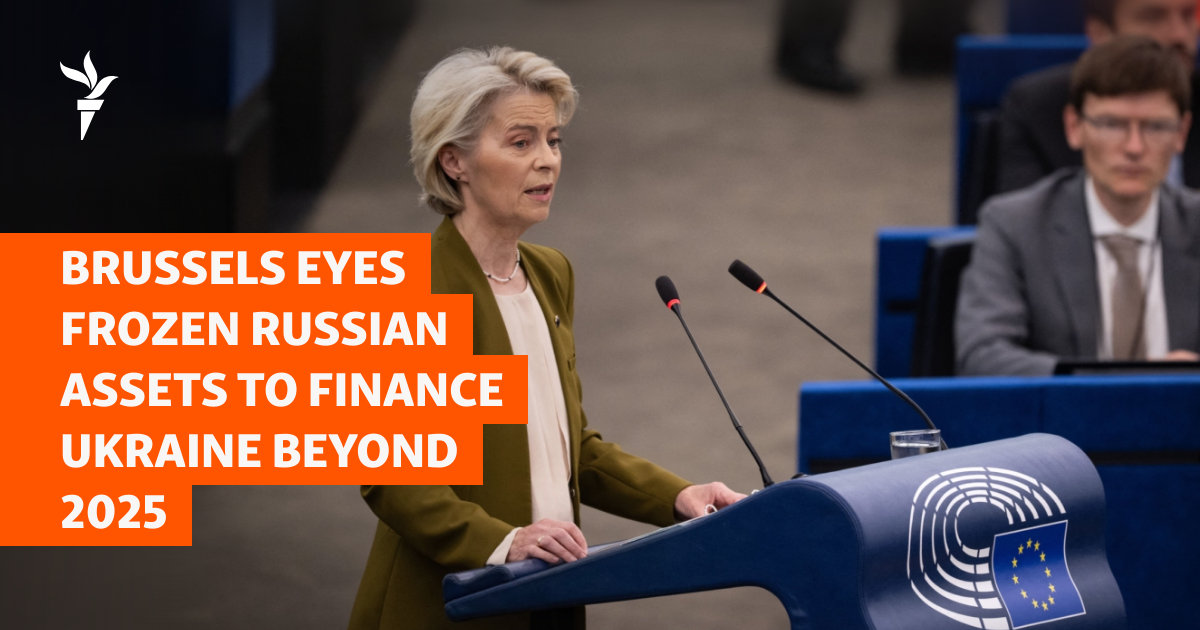
This initiative gained traction following European Commission President Ursula von der Leyen’s annual policy address in September. She proposed utilizing Russian funds frozen since the invasion began as a foundation for long-term assistance to Ukraine.
Details of the Proposed Reparations Loan
The concept, briefly discussed by EU ambassadors in late September, is outlined in a one-page paper distributed by the European Commission. The plan envisions the use of frozen Russian assets, particularly those held by Euroclear—a Belgian-based financial services company—as collateral for a loan to Ukraine. Importantly, the capital itself would remain untouched, with Ukraine only required to repay once Russia provides war reparations.
The key advantage of this approach is its ability to circumvent vetoes by member states such as Hungary and Slovakia, which have previously blocked EU funding for Ukraine. Moreover, it offers a solution to the ongoing debate over the future of these frozen assets and could alleviate strain on the EU’s budget.
Political and Legal Challenges Ahead
However, significant obstacles remain. The frozen assets total approximately 176 billion euros ($207 billion), largely concentrated in Euroclear. Some EU nations, particularly the Baltic states, advocate for outright confiscation to fund military or reconstruction efforts. But larger Western European countries and the European Central Bank (ECB) oppose this, citing potential legal repercussions and risks to the euro’s status as a global reserve currency.
Belgium, home to Euroclear, is especially wary of legal claims from Russia. The ECB fears that confiscation could prompt non-EU countries to move reserves away from the euro, thereby weakening its international standing. As a compromise, the EU is currently channeling windfall profits from these assets—estimated at 1.5 billion euros ($1.75 billion) quarterly—directly to Ukraine.
Special Purpose Vehicle and Coalition Participation
The European Commission’s proposed solution involves transferring some or all of the frozen assets to a Special Purpose Vehicle (SPV). In return, the SPV would issue zero-coupon bonds guaranteed by a coalition of willing EU member states and possibly G7 nations. Funds from the SPV would be disbursed to Ukraine as loans during 2026 and 2027, with repayment contingent on Russia paying reparations.
According to preliminary assessments, this mechanism could provide up to 140 billion euros ($164 billion) over two years. This would be crucial if the United States declines to contribute. The scheme also avoids the need for unanimous approval from all 27 EU member states, a dynamic that previously caused delays in approving a 50-billion-euro ($59 billion) Ukraine aid package for 2024–2027.
Budget Constraints and Future Planning
Of the 50 billion euros previously allocated, 32 billion ($37 billion) has already been disbursed, leaving limited room in the EU budget. A new proposal to create a 100-billion-euro ($118 billion) Ukraine fund for 2028–2034 has been introduced, but this too requires unanimous member approval.
Immediate funding needs remain a priority, and the reparations loan could offer a timely solution. However, the temporary nature of asset freezes—renewed biannually by unanimous vote—means political will must be sustained. While the most recent extension passed without issue, future renewals may not be so smooth.
National Guarantees and Member State Hesitancy
The European Commission also suggests a shift to qualified majority voting for future sanctions renewals, though this would require broad political consensus. Leaders like Hungary’s Viktor Orban and Slovakia’s Robert Fico are likely to resist such changes.
Questions also linger over how many countries would join the ‘coalition of the willing’ to back the SPV’s bonds. In many cases, national parliaments would need to approve these guarantees, and growing budget deficits could make lawmakers reluctant. Euroclear, meanwhile, may seek solid guarantees and a role in managing the new financing structure.
Additionally, Euroclear could advocate for broader participation from other financial institutions holding Russian assets, further complicating negotiations.
This article is inspired by content from Original Source. It has been rephrased for originality. Images are credited to the original source.