

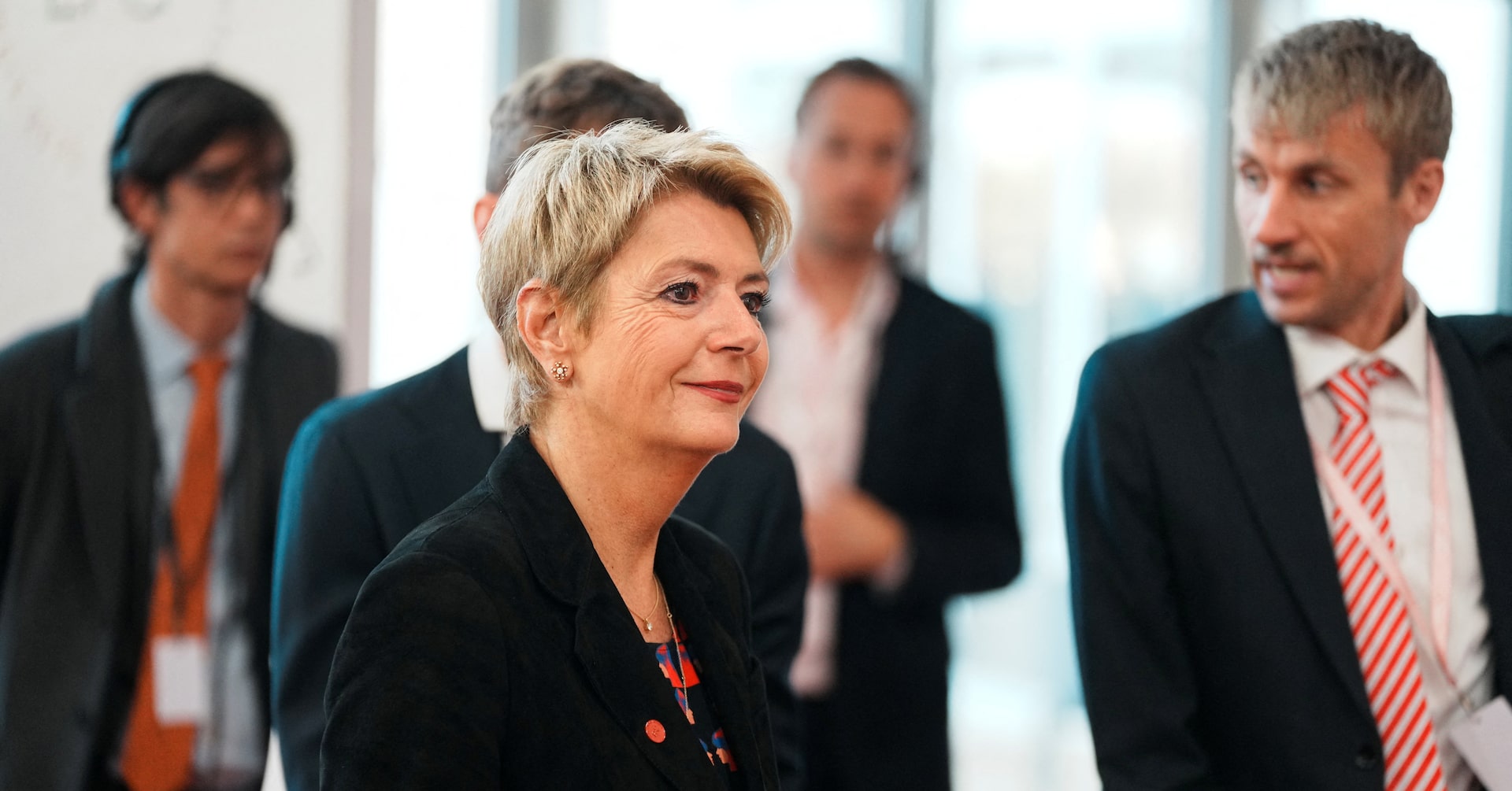
Swiss Finance Minister Highlights Ongoing U.S. Tariff Talks
Switzerland’s Finance Minister Karin Keller-Sutter emphasized that the country’s efforts to secure a favorable trade agreement with the United States are still in progress. This statement follows a high-level meeting earlier this week between Swiss corporate leaders and U.S. President Donald Trump.
The talks come in the wake of the United States imposing steep tariffs—up to 39%—on Swiss imports in August. These duties are among the highest implemented under the Trump administration’s global trade realignment strategy, leaving Swiss policymakers and corporations scrambling for solutions.
Speaking to the Swiss newspaper Blick on Thursday, Keller-Sutter addressed criticism about her handling of the trade dispute. She defended her actions as president of Switzerland, noting that she had engaged in direct dialogue with Trump prior to the announcement of the tariffs.
Trump Rejected Previous Agreement
“He did not agree with the negotiated agreement. Period,” Keller-Sutter stated bluntly. “We have to live with that. The talks are continuing.”
While she refrained from disclosing specific details about the ongoing negotiations, Keller-Sutter made it clear that the resolution ultimately rests in the hands of the U.S. president. “Ultimately, it is up to the U.S. president to decide whether or not to agree to a deal,” she said.
The Swiss government has been pursuing diplomatic channels to resolve the issue, but the lack of assurances from the U.S. side has left the outcome uncertain. Keller-Sutter did not confirm whether a resolution could be expected by the end of the year.
Swiss Business Leaders Lobby Trump
In a parallel effort, a delegation of top Swiss business executives met with President Trump at the White House on Tuesday to argue for tariff relief. The delegation included representatives from major Swiss firms such as shipping giant MSC, watchmaker Rolex, commodities trader Mercuria, investment firm Partners Group, luxury goods conglomerate Richemont (owner of Cartier), and precious metals company MKS.
The executives aimed to illustrate the damaging impact of the tariffs on their operations and on the Swiss economy overall. According to Switzerland’s economy ministry, the group had organized the meeting to draw attention to the broader economic consequences of the U.S. tariffs.
Swiss Government Supports Private Sector Initiative
The Swiss government expressed support for the corporate delegation’s initiative. “Diplomatic and political exchanges are continuing with a view to achieving a rapid reduction in additional tariffs,” the economy ministry said in a statement.
By leveraging both governmental and private sector efforts, Switzerland hopes to persuade the United States to ease the burdensome tariffs. However, the absence of a clear timeline or commitment from the Trump administration has added to the uncertainty surrounding the negotiations.
Political analysts note that President Trump’s trade policies have often deviated from traditional diplomatic frameworks, focusing instead on bilateral leverage and economic nationalism. This unpredictability makes it difficult for foreign governments like Switzerland to navigate trade discussions effectively.
Implications for Swiss Economy
The tariffs have had a tangible impact on Swiss exports, particularly in sectors like luxury goods, precious metals, and shipping. Companies affected by the tariffs have reported increased costs and logistical challenges that threaten their competitiveness in the U.S. market.
Industry leaders have warned that prolonged trade barriers could lead to reduced investments, job cuts, and weakening of Switzerland’s traditionally strong export-driven economy. The country’s trade surplus with the U.S. has made it a target in Trump’s broader campaign to address what he views as unfair trade practices.
While Swiss officials and business leaders continue their advocacy, the final decision lies with President Trump, whose policy decisions often reflect strategic political considerations as much as economic rationale.
Looking Ahead
As the year winds down, both Swiss authorities and company executives remain cautiously optimistic but realistic about the hurdles ahead. Keller-Sutter’s comments reflect a measured approach, acknowledging the limits of diplomatic influence in light of the White House’s unpredictable trade stance.
Observers will be closely watching how the situation evolves, especially as political dynamics in the U.S. continue to shift in the lead-up to the 2026 elections. For now, the Swiss-U.S. trade relationship hangs in the balance, awaiting a signal from the Oval Office.
This article is inspired by content from Original Source. It has been rephrased for originality. Images are credited to the original source.