

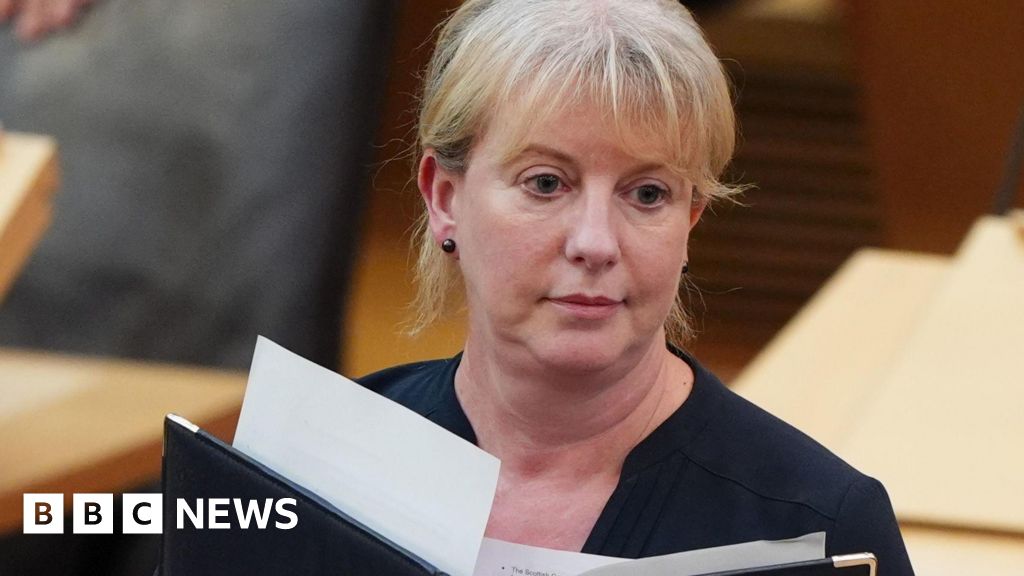
Scotland Demands Assurances Amid Speculation of Tax Hike
Scotland’s Finance Secretary, Shona Robison, has called on UK Chancellor Rachel Reeves to provide urgent assurances regarding potential changes to income tax policy. This comes amid speculation that Reeves may introduce tax increases in her upcoming Budget, a decision that could significantly impact Scotland’s finances due to the block grant funding system.
Robison expressed her concerns following Reeves’ pre-Budget speech, where the Chancellor hinted at “necessary choices” in the face of global economic challenges but did not rule out raising income tax, VAT, or National Insurance. Such ambiguity has fueled fears in Scotland about a potential reduction in their Treasury-provided funding.
Consequences for Scotland’s Budget
Under the current fiscal framework, any increase in UK income tax could lead to a corresponding drop in Scotland’s block grant through a mechanism known as the Block Grant Adjustment (BGA). The BGA is designed to balance the funds Scotland receives from Westminster with the revenue it can independently raise through devolved taxation powers.
According to the Fraser of Allander Institute, a 2p increase in the basic rate of income tax across the rest of the UK could reduce Scotland’s budget by up to £1 billion unless the Scottish government mirrors the tax increase. This puts pressure on Holyrood to either raise taxes or cut spending to offset the shortfall.
Robison’s Three Key Tests for the Chancellor
Robison has requested an urgent meeting with Reeves and has outlined three key conditions she expects the UK government to meet:
- Abandon outdated fiscal rules that restrict day-to-day spending to tax revenues, adapting policy to current economic realities.
- Ensure that any tax hikes lead to increased investment in public services, thereby increasing the block grant to Scotland.
- Provide confirmation that Scotland’s funding will not be reduced due to UK tax policy changes.
“They came to office promising an end to austerity,” Robison said. “To impose it on Scotland would be a political betrayal from which Labour would never recover.”
Reeves’ Position and Treasury Response
While the Treasury has refrained from commenting directly on Budget speculation, a spokesperson emphasized the strength of the existing funding arrangements. “Our record funding settlement for Scotland means over 20% more per capita than the rest of the UK,” the spokesperson said.
The Treasury also highlighted several recent investments, including:
- £8.3 billion in funding for GB Energy-Nuclear and GB Energy in Aberdeen
- Up to £750 million for a new supercomputer at Edinburgh University
- £452 million over four years for City and Growth Deals across Scotland
“This investment is possible because our fiscal rules underpin the economic stability necessary for growth,” the Treasury added.
Implications of the Fiscal Framework
The Fiscal Framework, established nearly a decade ago, governs how Scotland’s devolved tax powers interact with UK-wide fiscal policy. A central feature of this agreement is the Block Grant Adjustment, which ensures neither the UK nor Scottish governments gain or lose unfairly due to devolution.
However, this system means that when the UK government increases income tax, the Treasury assumes that devolved governments will do the same. If Scotland chooses not to mirror the rise, it faces a proportional reduction in its block grant.
This structure was designed to maintain fairness but has increasingly come under scrutiny as economic conditions evolve. Critics argue that the rigid application of these adjustments could unduly penalize Scotland during periods of fiscal divergence.
Scotland’s Current Tax Landscape
Scotland already operates a more progressive income tax system. Those earning under £30,300 pay slightly less than their counterparts in the rest of the UK, with a maximum saving of around £28. However, higher earners face steeper rates. For example:
- Individuals earning £50,000 pay £1,528 more in Scotland
- Those earning £125,000 pay £5,207 more
First Minister John Swinney has previously stated there are no immediate plans to alter these tax rates ahead of the next Holyrood election in May. However, in light of Reeves’ recent comments, he has stopped short of ruling out future changes.
Looking Ahead to the Scottish Budget
The Scottish Budget will be unveiled on January 13, and Robison’s concerns underscore the delicate balancing act the Scottish government faces. They must navigate potential funding cuts from Westminster while maintaining commitments to public services and economic stability.
With the UK Chancellor’s final Budget decisions still pending, all eyes are on the forthcoming fiscal announcements. The outcome could significantly influence Scotland’s financial strategy and its political relationship with the UK government moving forward.
This article is inspired by content from Original Source. It has been rephrased for originality. Images are credited to the original source.