

US Skips COP30, Raising Global Concerns
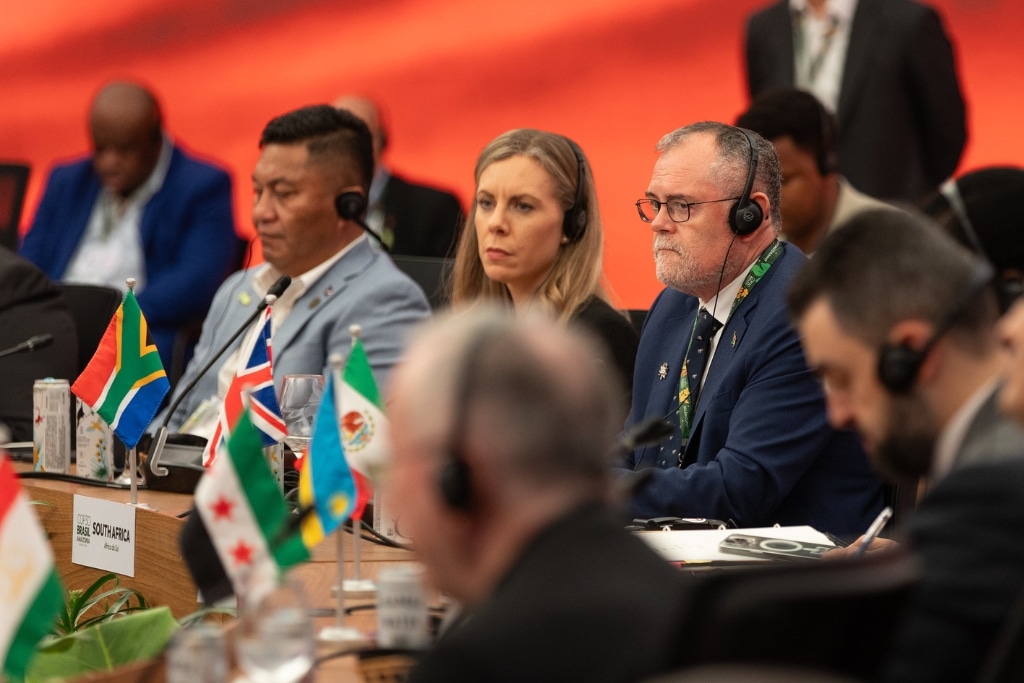
For the first time in three decades of United Nations Climate Change Conferences (COPs), the United States was absent from COP30, held in Belém, Brazil. This unprecedented move has raised alarm among climate advocates and policy leaders around the world, as the absence of the world’s largest historical emitter of greenhouse gases casts a long shadow over international climate finance discussions.
The lack of official U.S. participation has been interpreted by many as a step backward in the fight against global warming. Especially at a time when urgent action is needed to reduce emissions and support climate-vulnerable nations, the absence sends a troubling message about the commitment of major economies to climate action.
Impact on Climate Finance Negotiations
One of the most pressing challenges at COP30 was climate finance—specifically, how to fund mitigation and adaptation efforts in developing countries. Historically, the U.S. has played a critical role in shaping these discussions and contributing to climate finance mechanisms, such as the Green Climate Fund.
Without the U.S. at the table, negotiations over climate finance faced significant hurdles. Developing nations reiterated calls for wealthy countries to fulfill their long-standing promise of delivering $100 billion annually in climate finance—a pledge made in 2009 and reaffirmed in the 2015 Paris Agreement. However, progress remains slow, and the absence of U.S. leadership only exacerbated the impasse.
“We needed the U.S. to be here, not just in presence but in commitment,” said one negotiator from a Pacific island nation. “Their absence undermines trust and slows momentum.”
Historical Context and Political Backdrop
The U.S. absence at COP30 is reminiscent of the climate policy rollback seen under former President Donald Trump, who famously withdrew the U.S. from the Paris Agreement in 2017. Although President Joe Biden rejoined the accord in 2021 and pledged renewed leadership, the lack of representation at COP30 has reignited doubts about the consistency of U.S. climate policy.
Some analysts suggest that domestic political pressures ahead of the 2024 U.S. presidential election may have influenced the decision to skip the conference. Others believe internal divisions on climate policy have weakened the nation’s ability to maintain a unified stance on the global stage.
Global Reactions and Ramifications
The international community reacted with disappointment and concern. European Union representatives expressed frustration over the lack of U.S. engagement, emphasizing that collective action is vital to achieving global climate targets. Leaders from Africa, Southeast Asia, and Latin America voiced similar sentiments, warning that without sufficient funding and leadership, climate mitigation efforts could falter.
The absence also weakened the credibility of past U.S. climate promises. Many developing countries see financial support not as charity but as a moral obligation from nations that have historically contributed the most to climate change. The U.S.’s failure to show up is viewed by some as a breach of these commitments.
Private Sector and Civil Society Step Up
In the vacuum left by the federal government, American civil society groups, businesses, and state governments attempted to fill the gap. Delegations from California, New York, and other states attended side events and reaffirmed their commitment to climate goals. Major corporations also participated in climate discussions, highlighting their own sustainability initiatives.
While these efforts were welcomed, they were not seen as a substitute for federal leadership. “We appreciate the presence of non-state actors,” said a UN official, “but when it comes to international agreements and financial commitments, we need nations to lead.”
Looking Ahead: Uncertainty and Urgency
The path forward remains uncertain. With mounting pressure to meet the goals of the Paris Agreement and limit global warming to 1.5°C above pre-industrial levels, the need for robust international collaboration has never been greater. The U.S. absence at COP30 has made that collaboration more difficult and has left many wondering what role the nation will play in future climate summits.
Despite the setback, there is still hope that U.S. leadership can be revived. Climate experts stress that consistent engagement and tangible contributions to climate finance are crucial. The world will be watching closely to see whether the United States reasserts its role in time for future conferences, including COP31.
This article is inspired by content from Original Source. It has been rephrased for originality. Images are credited to the original source.