

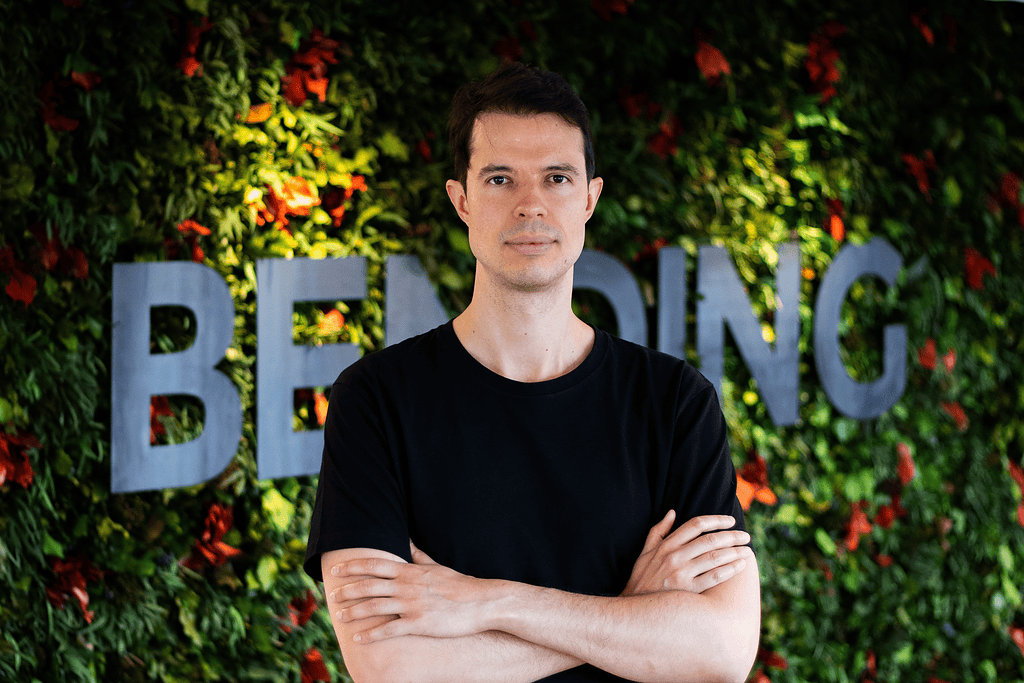
Bending Spoons: A Game-Changer in Tech Acquisitions
Bending Spoons’ buy-and-hold strategy is shaking up the world of technology mergers and acquisitions. The Italian-based company, founded in 2013 and recently listed on Nasdaq, has become renowned for acquiring distressed digital brands such as AOL, Vimeo, Eventbrite, WeTransfer, and most recently, Airtable. By purchasing these companies at a fraction of their peak value and deeply transforming them for long-term growth, Bending Spoons is rewriting the rules of tech investment.
The Distinctive Buy-and-Hold Approach
Unlike traditional private equity firms, which typically aim to improve and then sell off assets for profit, Bending Spoons employs a buy-and-hold strategy. The company seeks out undervalued or struggling technology brands, overhauls their operations, and retains ownership instead of seeking a quick exit. This approach has enabled Bending Spoons to execute 50 acquisitions since its inception, with the goal of building a robust portfolio of rejuvenated digital businesses.
The company’s funding model relies primarily on debt and the profits generated by these improved businesses. Over 70% of Bending Spoons’ acquisitions in the first quarter of this year were financed through debt, which now totals between $4.3 billion and $4.4 billion, with net debt close to $3.7 billion. Despite the risks associated with such leverage, Bending Spoons’ revenues have soared from $387 million in 2023 to $1.3 billion last year, reflecting the effectiveness of its operational turnaround strategy.
Transforming Distressed Digital Brands
Bending Spoons’ latest acquisition, Airtable—a collaborative work management software company—was purchased for $1.29 billion in cash, representing an astonishing 90% discount from its 2021 valuation. This bold move encapsulates the company’s philosophy: buy low, invest in deep structural transformation, and hold for long-term value creation.
According to CEO Luca Ferrari, the company’s model is not merely about layoffs or cost-cutting. Instead, each acquired company undergoes comprehensive restructuring, from technology and product to monetization strategies and team composition. Ferrari describes this as a “deep transformation” that aims to rebuild brands from the ground up. The company’s name, inspired by The Matrix, reflects a belief in reshaping reality through a flexible mindset.
Financial Performance and Market Impact
Bending Spoons’ financial results underscore the success of its buy-and-hold strategy. In the most recent quarter, the company reported $704 million in revenue and $177 million in net income—an increase of 126% and 171%, respectively, from the same period in the previous year. The company’s listing on Nasdaq resulted in a 40% surge on its trading debut, and Bending Spoons now boasts a market value of $23 billion.
Ownership aims for an annualized return of 25% on invested capital, focusing on operational earnings rather than short-term divestments or workforce reductions. This focus on organic growth and operational efficiency differentiates Bending Spoons from traditional private equity operators.
Challenges and Competitive Landscape
While the buy-and-hold strategy offers significant advantages, such as optimizing for cash generation and long-term growth, it comes with unique risks. As Chelsea Michelle, founder of Elevated Business Advisors, points out, the true challenge lies in effectively integrating acquired companies. For Bending Spoons, which holds onto its acquisitions indefinitely, poor integration can have lasting negative effects. Investors and analysts are closely monitoring how the company manages these integrations post-Nasdaq listing.
Bending Spoons is often compared to Constellation Software Inc. and Barry Diller’s People Inc. (formerly IAC Inc.), both of which pursue similar models but either take on less debt or have different strategic priorities. However, Bending Spoons’ refusal to sell its acquisitions and its focus on deep transformation set it apart in the competitive landscape of tech M&A.
Looking Ahead: Can the Model Be Replicated?
With only 9% of its shares available for public trading and a dual-class share mechanism ensuring founder control, Bending Spoons is positioned for long-term stability. The company receives around 800,000 job applications for its “Spooner” roles annually, but only a tiny fraction are selected, reflecting a rigorous approach to talent acquisition and operational discipline.
As Bending Spoons looks to the future, the sustainability of its buy-and-hold strategy will depend on its ability to continue integrating and transforming acquired brands. Investors and industry observers are keen to see if this model, which values durable user bases and operational excellence, can be replicated by other players—or if Bending Spoons will remain a unique disruptor in tech M&A.
Ultimately, the company’s long-term performance will be the true measure of its success, and only time will reveal whether its innovative approach will reshape the industry for years to come.
This article is inspired by content from Original Source. It has been rephrased for originality. Images are credited to the original source.