

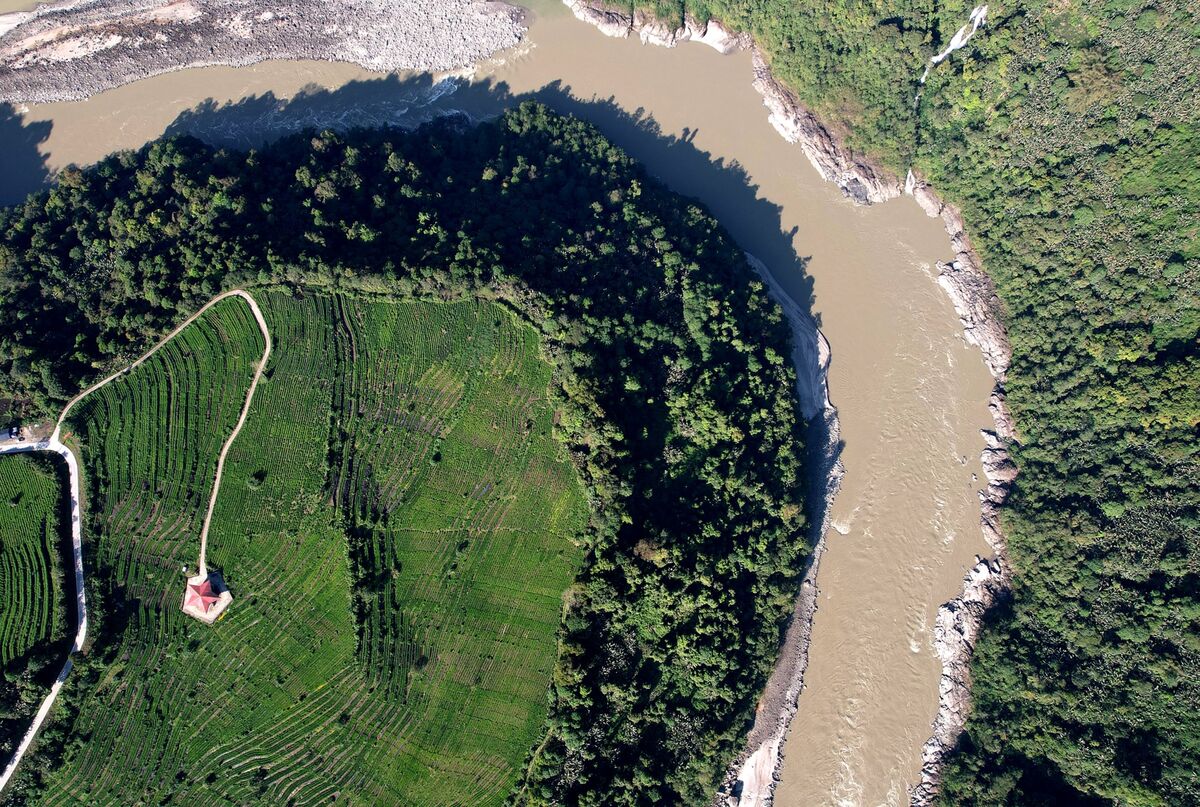
China Launches $167 Billion Hydropower Project
China has embarked on a monumental $167 billion hydropower initiative in Tibet, marking a significant milestone in its efforts to accelerate green financing. The Yarlung Tsangpo development, under the stewardship of newly formed state-owned entity China Yajiang Group, is poised to invigorate the country’s green debt market, even as Western economies face a slowdown.
This mega-dam project, located in one of the most geostrategically and ecologically sensitive regions, is expected to become a cornerstone of China’s environmental and economic strategy. Citigroup analysts Xiangrong Yu and Xinyu Ji highlighted in a recent report that the project could tap various funding sources, including major bank loans or bond issuances.
Strategic Timing Amid Global Financial Shifts
The timing of this initiative is noteworthy. As the US and Europe experience a deceleration in green finance activities, China is stepping up to fill the gap. The massive scale of the Yarlung Tsangpo project is expected to stimulate a wave of new fundraising endeavors, further reinforcing China’s leadership in sustainable investment.
“The Yajiang Group’s financial strategy could potentially drive a surge in ESG-related bond offerings,” the Citigroup analysts wrote. By leveraging both domestic and international capital markets, the project could showcase China’s commitment to environmental stewardship while bolstering its economic influence in global finance.
Green Debt Market Poised for Expansion
China has already made significant strides in green finance, becoming the largest issuer of green bonds globally in recent years. The Yarlung Tsangpo project is likely to accelerate this trend. With more than 1.2 trillion yuan earmarked for development, it represents one of the largest green infrastructure investments in history.
According to industry experts, the project could set a precedent for how large-scale infrastructure can be aligned with environmental, social, and governance (ESG) goals. The hydropower facility will contribute to China’s ambitious target of reaching peak carbon emissions before 2030 and achieving carbon neutrality by 2060.
Environmental and Geopolitical Considerations
Despite the optimism surrounding the project’s financial and environmental benefits, there are concerns about its broader impact. The Yarlung Tsangpo River, which flows through Tibet into India where it becomes the Brahmaputra, is a vital water source for millions. Environmentalists and neighboring countries have raised alarms about the ecological and geopolitical implications of large-scale damming in the region.
Chinese authorities have attempted to address these concerns by emphasizing advanced engineering standards and environmental safeguards. Still, the project’s scale and location mean that it will remain under intense international scrutiny throughout its development.
Implications for Global Green Financing
The launch of the Yarlung Tsangpo dam signals a shift in the global green finance landscape. While Western economies wrestle with inflation, political uncertainty, and regulatory bottlenecks, China is seizing the opportunity to position itself as a global leader in sustainable finance.
“China’s proactive approach to funding green infrastructure could reshape global capital flows,” noted a recent industry analysis. By channeling massive investments into environmentally friendly megaprojects, China is not only addressing its domestic energy needs but also exporting its financial and technological models to the world.
Future Outlook
As construction on the Yarlung Tsangpo project progresses, analysts will be closely monitoring how the China Yajiang Group structures its financing. Whether through syndicated loans, green bonds, or public-private partnerships, the funding mechanisms adopted could become templates for similar projects across Asia and beyond.
Meanwhile, global investors are expected to pay close attention to the outcomes. With ESG investing gaining traction among institutional players, large-scale, government-backed initiatives like this one may offer both stability and returns, making them attractive portfolio additions.
In summary, China’s $167 billion mega-dam not only represents a bold step toward renewable energy dominance but also serves as a catalyst for expanding the green finance ecosystem. Its success or failure could have far-reaching implications for how nations fund sustainable development in the decades ahead.
This article is inspired by content from Original Source. It has been rephrased for originality. Images are credited to the original source.