

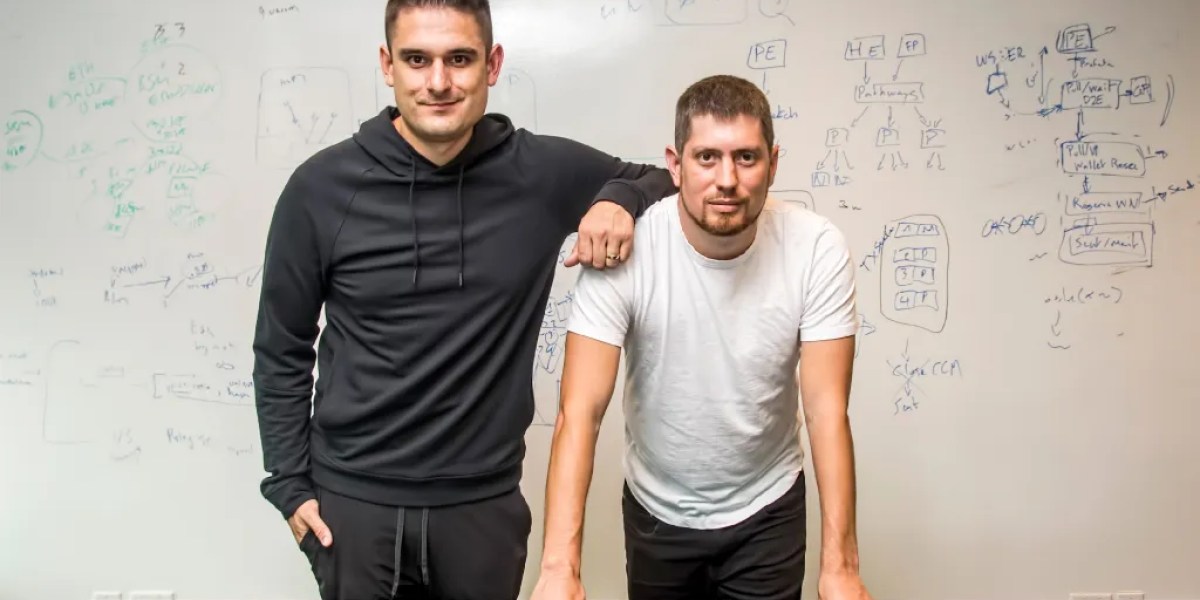
LayerZero Unveils Zero Blockchain for Financial Institutions
LayerZero, a blockchain firm backed by Andreessen Horowitz and Sequoia Capital, has introduced its own layer-1 blockchain named Zero, designed specifically to meet the high-performance demands of traditional finance. The announcement comes as financial giants like Citadel, ARK Invest, and Intercontinental Exchange (ICE) join forces with the startup, signaling a significant shift in Wall Street’s approach to blockchain adoption.
The new blockchain aims to solve two of the most pressing issues facing the financial industry’s transition to decentralized infrastructure: scalability and privacy. Zero utilizes advanced zero-knowledge proofs to ensure transaction validity while keeping sensitive data off public ledgers like Ethereum and Solana.
Addressing Wall Street’s Blockchain Challenges
Traditional finance institutions have long been wary of adopting blockchain due to concerns over transaction speed, cost, and data privacy. According to LayerZero cofounder Bryan Pellegrino, Zero has been engineered to address these concerns from the ground up.
“We started with first principles,” said Pellegrino in an interview. “By rethinking how zero-knowledge proofs work, we’re able to deliver 2 million transactions per second at a fraction of a cent per transaction.” In comparison, Solana—a blockchain known for speed—has a peak rate of around 100,000 transactions per second.
The Zero blockchain stands out because it is not merely a connective infrastructure like LayerZero’s previous offerings but a competitor in the blockchain ecosystem. This strategic pivot reflects the company’s ambition to become a foundational layer for global financial transactions.
Major Financial Players Join the Initiative
The project is already gaining significant traction, with Citadel, ARK Invest, and ICE—the parent company of the New York Stock Exchange—participating as investors and strategic partners. Citadel is reportedly investing through a purchase of LayerZero’s proprietary token, ZRO, although the financial terms remain undisclosed.
Cathie Wood, CEO of ARK Invest, expressed enthusiasm for the project. “LayerZero has such an expansive understanding of market dynamics,” she said. “They’re bringing internet speed to finance. That’s a transformative idea.”
Adding further credibility, the stablecoin issuer Tether has also committed to investing in the venture. These partnerships position Zero as a serious contender for institutional blockchain infrastructure.
The Technology Behind Zero
Zero’s technological edge lies in its implementation of zero-knowledge proofs, an advanced cryptographic method that allows data to be verified without revealing the underlying details. Pellegrino credits this breakthrough to the hiring of two world-class engineers whose identities are reportedly known only to a select few within the 165-person company.
A demonstration of the Zero blockchain is scheduled for this week, with an official launch planned for September 2026. While the technology is still in its early stages, the implications for institutions like the DTCC—responsible for trillions in asset transfers—are profound.
Industry Implications and Future Outlook
Many financial firms, including the NYSE, have initiated tokenization pilots to explore the issuance of digital assets on blockchain networks. However, critics argue that these efforts have largely been marketing exercises lacking meaningful integration.
“One of the key hurdles has been speed and transactions per second,” said Wood. “This is in a completely different league.”
While it remains to be seen how the NYSE and similar institutions will weave Zero into their operations, LayerZero’s leadership is confident. Pellegrino emphasized the need for infrastructure that supports 24/7, globally integrated markets, moving away from the traditional 7/5 trading schedule.
“When you think about the next few years, how do markets evolve?” he asked. “How do you actually build those markets for the future?”
LayerZero cofounder Raz Zarick echoed this sentiment, stressing that while today’s systems can’t yet handle such throughput, a blockchain with the capacity for 2 million transactions per second represents the future of the world economy.
Conclusion
As traditional finance inches closer to embracing decentralized technology, LayerZero’s Zero blockchain could be the catalyst that accelerates this transition. With backing from key financial institutions and groundbreaking advancements in scalability and privacy, Zero is poised to redefine how markets operate in the digital age.
This article is inspired by content from Original Source. It has been rephrased for originality. Images are credited to the original source.