

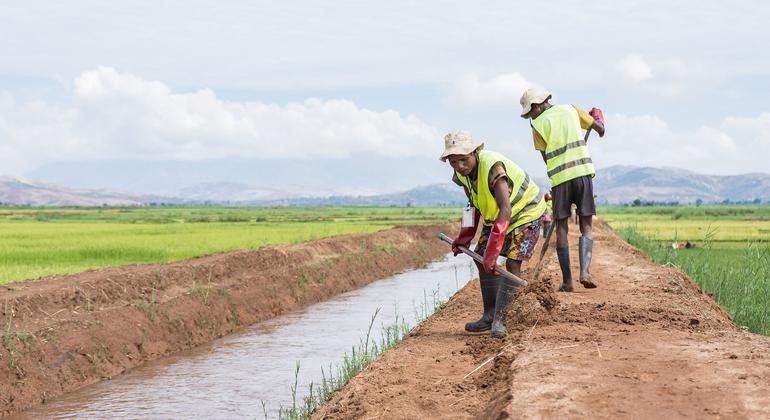
The Growing Development Finance Gap
Development finance gap is becoming an increasingly urgent issue, threatening to reverse years of progress towards global development goals. According to a recent UN report, deepening geopolitical tensions, global fragmentation, and ongoing conflicts are undermining the financial foundations needed to achieve the Sustainable Development Goals (SDGs) by 2030. The 2026 Financing for Sustainable Development Report highlights the critical need for renewed investment and cooperation on a global scale.
The Sevilla Commitment: A Global Pledge
The focus of the report is the Sevilla Commitment, an agreement reached in 2025 that aims to mobilize $4 trillion annually to support the SDGs. UN Deputy Secretary-General Amina Mohammed emphasized that implementing the Sevilla Commitment is the world’s best opportunity to demonstrate international unity and unlock the essential finance required to keep the SDG promise alive. This commitment is seen as a vital step in closing the development finance gap and ensuring that progress is not lost.
Challenges Facing Development Finance
Despite these ambitious goals, the UN warns that the development finance gap is actually widening rather than shrinking. Li Junhua, UN Under-Secretary-General for Economic and Social Affairs, expressed concern that the resources needed to achieve the SDGs within the next four years are not materializing. He cited several worrisome trends, including a sharp decline in Official Development Assistance (ODA), which dropped by 6% in 2024 and then plunged another 23% the following year.
Compounding the issue, many developing countries—especially the poorest and most vulnerable—face mounting debt pressure, high capital costs, and increased expenses related to environmental and climate challenges. Debt servicing burdens in these nations have now reached their highest levels in two decades, making it even harder for them to invest in sustainable development initiatives.
Trade Barriers and Geopolitical Risks
Li Junhua also highlighted the threat to multilateralism, as powerful nations redraw trade and investment alliances, often leaving the poorest countries at a disadvantage. This erosion of global cooperation has led to a dramatic rise in tariffs on exports from the world’s Least Developed Countries (LDCs). In 2025, average tariffs on LDC exports soared from 9% to 28%, while other developing countries (excluding China) saw average tariffs jump from 2% to 19%—an eightfold increase.
Additionally, the ongoing conflict in the Middle East has sent shockwaves through the global economy. Developing countries are suffering the consequences, with increased instability in energy and food markets, disrupted trade, and growing concerns over debt sustainability.
Signs of Progress Amid Setbacks
Despite these challenges, the report also points to notable positive developments. In 2024, global spending on renewable energy reached a record $2.2 trillion, doubling the investment in fossil fuels for the same period. Furthermore, trade between developing countries—so-called South-South trade—has quadrupled over the last 20 years, providing a glimmer of hope for greater economic cooperation and shared prosperity.
Urgent Need to Bridge the Gap
Still, the UN report makes it clear that bridging the development finance gap is essential for achieving the SDGs. Mr. Li concluded that implementing the Sevilla Commitment remains the only viable path forward. He called on political leaders and member states to translate their commitments into concrete action, moving beyond rhetoric to the practical mechanics required for sustainable development financing.
The Path Forward for Development Finance
As the world faces increasing uncertainty and complex challenges, closing the development finance gap is more crucial than ever. Stronger international cooperation, innovative financing solutions, and a renewed dedication to multilateralism are necessary to ensure that decades of hard-won development progress are not lost. The coming years will be pivotal in determining whether the global community can meet its ambitious goals and secure a sustainable future for all.
This article is inspired by content from Original Source. It has been rephrased for originality. Images are credited to the original source.