

Understanding the Next Financial Crisis
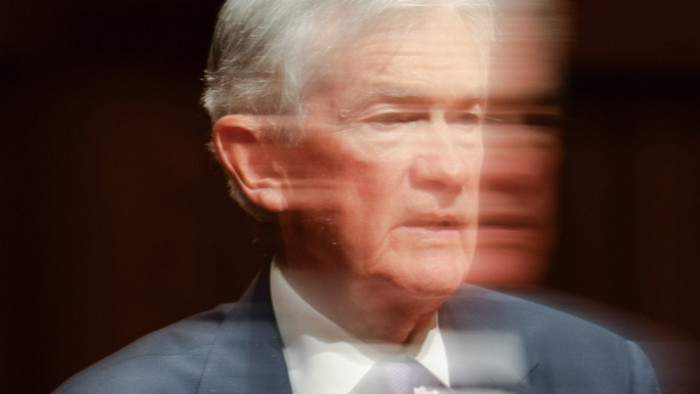
The question of what might trigger the next financial crisis is increasingly relevant amid global economic uncertainty. Concerns about financial crisis risks range from soaring national debt to evolving technologies and volatile private credit markets. When US Federal Reserve Chair Jerome Powell addressed Harvard University students, his insights shifted the conversation from geopolitical tensions to the alarming rate at which US government debt is mounting.
US Government Debt: A Growing Threat
In March 2026, the US national debt reached a staggering $39 trillion, accounting for 125% of GDP—a figure that has more than doubled since 2007. Powell emphasized that while countries like Italy and Japan have even higher debt-to-GDP ratios, the real issue in the United States is the unsustainable pace at which debt continues to grow. “Federal government debt is growing substantially faster than the economy and that is the definition of unsustainable,” Powell stated.
Recent proposals to increase the US defense budget by 50% are likely to drive the debt even higher. Experts warn that if the debt trajectory is not curbed, investors may start to question the long-standing safe-haven status of the US dollar and Treasury bonds—assets that form the backbone of the global financial system. According to Yale professor Andrew Metrick, “Eventually you will get a crisis where the world says safe assets are no longer considered safe, that is US dollar-denominated sovereign debt. If that happens, we don’t really have the tools to deal with it. That is the biggest risk.”
Geopolitical and Economic Pressures
The ongoing conflict in Iran and broader Middle East instability are adding further pressure to the US fiscal situation. Concerns about an energy shock, which could force the Federal Reserve to hike interest rates, have already led to a sharp rise in long-term Treasury yields. As Metrick notes, “It is clear that we can’t keep borrowing like there is no tomorrow. At some point the market will say that is enough.”
Central banks globally are bracing for the potential consequences of a prolonged oil supply shock, which could result in stagflation—a scenario of rising inflation and stagnant economic growth. The Bank of England recently warned that such geopolitical events could worsen the outlook for sovereign debt worldwide, constraining governments’ abilities to respond to future shocks and exposing vulnerabilities in sovereign debt markets.
Private Credit Markets: A Double-Edged Sword
While attention is often focused on government debt, the private credit sector has also grown to $1.8 trillion, presenting its own set of financial crisis risks. Several large US funds have limited investor withdrawals amid fears of rising losses on loans to heavily indebted companies. JPMorgan Chase CEO Jamie Dimon cautioned, “Losses on all leveraged lending in general will be higher than expected, relative to the environment, because credit standards have been modestly weakening pretty much across the board.”
Despite these concerns, Powell downplayed the likelihood of private credit markets triggering a systemic crisis. He noted, “We are looking for connections to the banking system and things that might result in contagion. We don’t see those right now. What we see is a correction going on.” Likewise, Jón Danielsson of the London School of Economics suggested that the longstanding regulatory focus on private credit reduces its risk as a crisis catalyst.
AI and Financial Technology: A New Frontier of Risk
Beyond traditional risks, experts are increasingly wary of how rapid advances in artificial intelligence could reshape financial crisis risks. As financial institutions leverage AI for treasury functions and liquidity management, there is a growing possibility that shocks could propagate through the system much more quickly than before. Danielsson warns that, while banks may respond to crises at lightning speed thanks to AI, regulators may lag behind, making it harder to contain the fallout.
“Banks are using AI to manage treasury functions and liquidity management, looking at how serious an event is when a shock happens and what they should do, and then there is a race to respond so the next crisis happens much faster,” Danielsson explained. This technological arms race could make the financial system more vulnerable to rapid, unanticipated disruptions.
Conclusion: Navigating Uncertain Waters
As the debate continues over the most significant financial crisis risks, consensus is elusive. Mounting US government debt, private credit market vulnerabilities, and the unpredictable impact of AI all vie for attention. The message from policymakers and experts is clear: vigilance and proactive measures are essential to safeguard the financial system from the next major shock.
This article is inspired by content from Original Source. It has been rephrased for originality. Images are credited to the original source.