

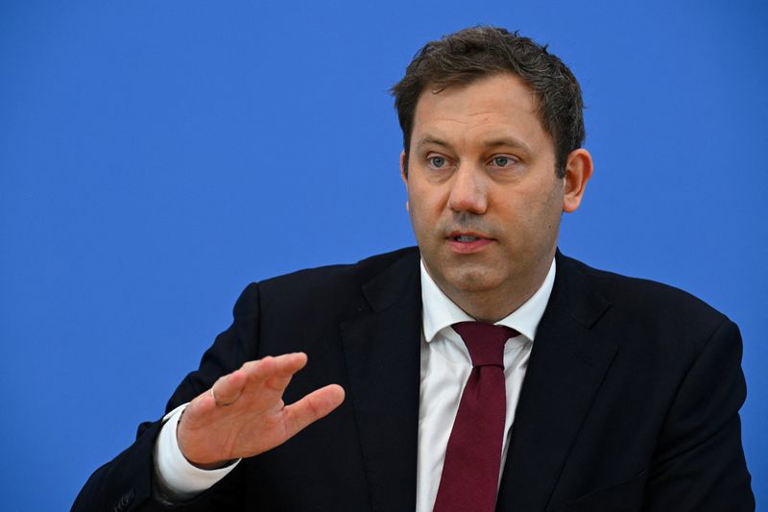
German Finance Minister Seeks Resolution on Steel Tariffs
Germany’s Finance Minister Christian Lindner is set to press for a long-term solution to U.S. steel and aluminum tariffs during his upcoming visit to Washington. The talks aim to prevent a re-imposition of tariffs that were temporarily lifted in 2021 under a quota agreement between the European Union and the United States.
Lindner’s trip underscores the importance of resolving transatlantic trade tensions that have flared intermittently since the Trump administration imposed the duties in 2018, citing national security concerns.
Push for Permanent Quota System
During his discussions with U.S. officials, Lindner plans to advocate for a permanent quota system to replace the current temporary arrangement. “We need a stable framework that provides certainty for our industries,” Lindner said prior to his departure.
The minister emphasized that German and European manufacturers need long-term predictability to make investment decisions and stay competitive in the global market.
Background of the Trade Dispute
In 2018, the United States imposed a 25% tariff on steel and a 10% tariff on aluminum imports from the European Union, citing national security concerns under Section 232 of the Trade Expansion Act. The move sparked outrage among U.S. allies and led to retaliatory tariffs from the EU.
In 2021, the Biden administration and the EU agreed to suspend these tariffs and replace them with a tariff-rate quota (TRQ) system. Under this arrangement, a limited volume of EU steel and aluminum can enter the U.S. duty-free, while imports exceeding the quota are subject to tariffs.
However, the TRQ system is set to expire at the end of 2023 unless a new deal is reached. Lindner’s visit is seen as a strategic effort to secure a new framework before the deadline.
Concerns from European Industry
European steel and aluminum producers have expressed concern over the uncertainty surrounding the future of the TRQ system. Industry groups argue that the lack of a long-term solution hinders planning and investment, particularly in the context of the EU’s green transition goals.
“We are at a critical juncture,” said a spokesperson for the European Steel Association (EUROFER). “Without a clear path forward, the industry faces a renewed risk of tariffs that would disrupt supply chains and undermine climate-focused investments.”
German industrial groups, especially those in the automotive and construction sectors, are closely watching the negotiations, as they rely heavily on steel and aluminum imports.
Potential for Broader Trade Agreement
Lindner’s visit is also expected to touch on broader economic cooperation between the U.S. and the EU. Officials have hinted that the two sides may explore a more comprehensive trade agreement that addresses not only metals tariffs but also climate-related trade measures and digital trade rules.
“This is an opportunity to deepen our economic ties and align our policies on key global challenges,” said an EU trade official familiar with the talks. “We hope to move beyond temporary fixes and toward a strategic partnership.”
U.S. Domestic Pressures
While the Biden administration has expressed openness to dialogue, it faces domestic political pressures from steel manufacturers and labor unions who support maintaining protective measures. Any agreement will need to balance international diplomacy with domestic economic interests.
“We support fair trade, but we must also ensure that American jobs and industries are protected,” said a spokesperson for the United Steelworkers union. “Any changes to the current system must take into account the impact on U.S. workers.”
Strategic Timing Ahead of 2024 Elections
The timing of Lindner’s trip is significant, as both the U.S. and EU are heading into key political cycles. With the 2024 U.S. presidential election on the horizon and European Parliament elections also approaching, leaders are eager to resolve trade disputes that could become politically contentious.
Analysts believe that reaching a long-term deal on steel and aluminum could serve as a model for resolving other trade disagreements and reinforce the transatlantic alliance amid growing global competition from China and other emerging economies.
“A successful outcome here would send a strong signal,” said a senior German official. “It would show that the U.S. and EU can work through differences and build a stable economic partnership.”
This article is inspired by content from Original Source. It has been rephrased for originality. Images are credited to the original source.