

India to Remain IFC’s Largest Investment Destination
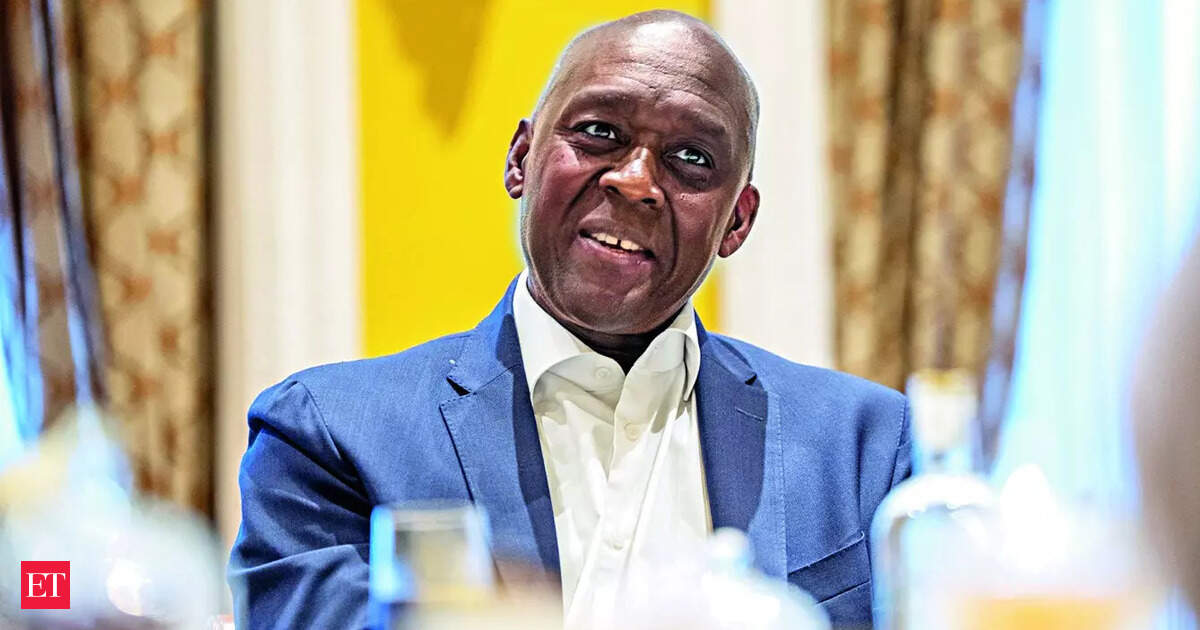
India’s robust economic growth, projected at 6.4%, is set to ensure that it remains the International Finance Corporation’s (IFC) largest global portfolio. In an exclusive interview, Makhtar Diop, Managing Director of IFC, emphasized the organization’s ambition to expand its annual commitment to India to $10 billion by 2030. This move aligns with India’s increasing influence as a key emerging market, especially in sectors like infrastructure, green energy, and finance.
“An economy of this scale and growth requires us to elevate both our ambition and commitment,” Diop said. The IFC committed $5.4 billion to India last year, including $3.4 billion in mobilized capital. This fiscal year (FY26), the target is $7 billion, with a steady increase planned annually to reach the $10 billion milestone by 2030.
Focus on Urban Transformation and States
IFC’s strategy in India is shifting toward deeper engagement with states to support the World Bank Group’s urban transformation agenda. Diop noted his regular interactions with state leaders to tailor support to local development needs. “We aim to go beyond major cities and work closely with subnational entities to drive sustainable urban growth,” he said.
IFC recently made a landmark investment in the Greater Visakhapatnam Municipal Corporation—its first in an Indian city without a sovereign guarantee. This signals a new model of development finance, empowering municipalities to tap into global private capital for urban infrastructure projects.
Key Sectors of Investment
Diop highlighted several sectors where IFC sees promising returns. Financial services remain a strategic entry point to support broader economic goals, including expanding credit access to underserved areas. Infrastructure and renewable energy are strong investment areas, with recent projects including e-bus financing and battery development. “Green mobility is a central theme in our India strategy,” Diop said.
Real estate, logistics, and housing also feature prominently. “IFC was among the first investors in HDFC back in 1978,” Diop recalled, underscoring the long-term commitment to India’s housing sector. The organization is also expanding support to the micro, small, and medium enterprises (MSME) sector via partnerships with institutions like Shriram Finance and Bajaj Finance.
Global Trade Uncertainty and Supply Chains
Diop acknowledged the challenges posed by global trade disruptions and supply chain instability. “The world is facing diverse, often uncorrelated shocks,” he said, citing geopolitical conflicts and the ripple effects of the COVID-19 pandemic. He noted that India’s proactive policies, such as the Production Linked Incentive (PLI) scheme, position it well to diversify supply chains and attract foreign investment.
According to World Bank projections, global growth is expected to slow to 2.3% in 2025—the weakest seven-year stretch since the 1960s. Despite this, Diop remains optimistic about India’s resilience and its private sector’s adaptability in uncertain times.
Policy Reforms and Resilience
India’s recent recast of the Goods and Services Tax (GST) and the success of the Unified Payments Interface (UPI) are examples of reforms that enhance the country’s ease of doing business. Diop praised these initiatives and stressed the importance of simplifying regulations to attract more investment. “Strengthening subnational governance is crucial in a country of India’s scale,” he added.
Multilateral vs. Bilateral Approaches
Commenting on the global shift from multilateralism to bilateral arrangements, Diop observed that today’s world is in a state of flux. “We haven’t yet found a new equilibrium,” he said, citing simultaneous crises in Ukraine, Gaza, and Sudan. Institutions like IFC must constantly reassess their relevance and adapt to changing global dynamics.
IFC’s Evolving Investment Strategy
Driven by reforms under World Bank President Ajay Banga, IFC is simplifying its operations and leveraging the strengths of its sister institutions—IBRD, MIGA, and ICSID. The focus is on creating integrated financial packages that better serve client needs.
Diop outlined five strategic pillars guiding IFC’s investments:
- Equity Investments: Many developing market firms are over-leveraged. Providing equity, rather than debt, can be transformative.
- Policy Clarity: Stability and transparency are key concerns for private investors. IFC is working through its Private Sector Investment Lab to identify critical reforms.
- Addressing Maturity and Currency Risks: IFC is extending loan maturities and increasing local-currency financing, which now accounts for 40% of its total financing.
- MSME Support: Expanding access to finance for small businesses is central to IFC’s 2030 strategy.
- Guarantees: A new one-stop model, led by MIGA, is being developed to simplify and enhance the effectiveness of guarantees.
These strategic shifts aim to not only support India’s domestic growth but also help Indian firms invest abroad, particularly in critical mineral sectors. “It’s not just about investing in India,” said Diop, “but also helping Indian companies access global markets.”
Conclusion
With its strong economic fundamentals, policy reforms, and expanding sectors like green energy and infrastructure, India is well-positioned to remain at the forefront of IFC’s global portfolio. As the world navigates economic uncertainty and geopolitical upheaval, IFC’s growing commitment to India is a testament to the country’s enduring investment appeal.
This article is inspired by content from Original Source. It has been rephrased for originality. Images are credited to the original source.