

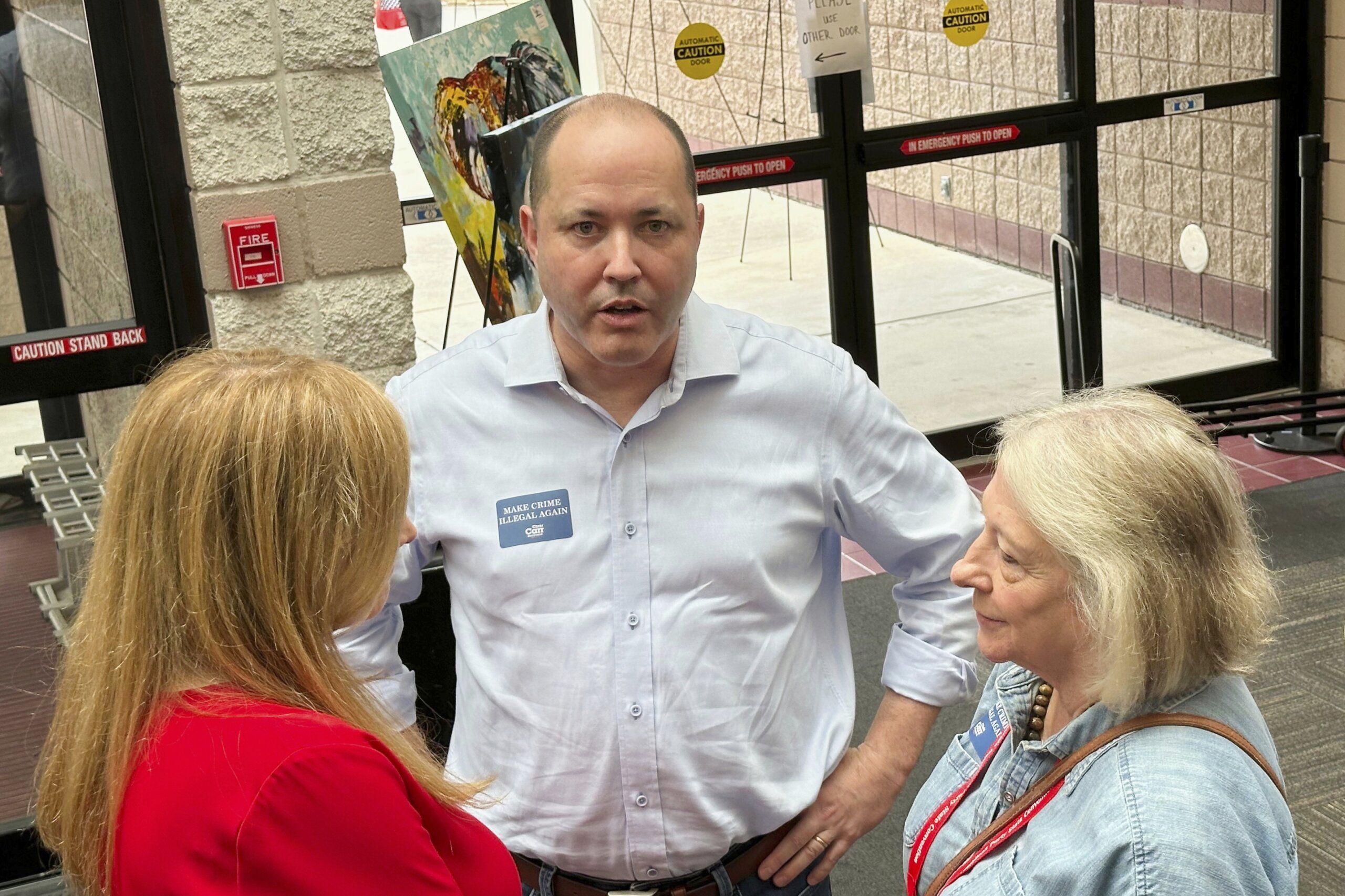
Federal Judge Rejects Campaign Finance Lawsuit in Georgia GOP Race
A federal judge has dismissed a lawsuit filed by Georgia Attorney General Chris Carr against Lieutenant Governor Burt Jones, a key rival in the 2026 Republican gubernatorial primary. The lawsuit alleged that Jones had an unfair advantage in campaign fundraising due to a special leadership committee granted under a 2021 state law.
Leadership Committee Grants Fundraising Edge
The ruling, delivered by U.S. District Judge Victoria Marie Calvert on Thursday, allows Lt. Gov. Burt Jones to continue utilizing his leadership committee to raise unlimited campaign funds. These committees are authorized only for select officials, including the governor, lieutenant governor, and a limited number of legislative leaders.
Carr, who filed the lawsuit earlier this month as a candidate—not in his official capacity—contended that the fundraising disparity violated his constitutional rights to free speech and equal protection. His campaign must rely on a traditional committee, which is capped at $8,400 per donor in the primary and $4,200 in a potential runoff.
Judge: Law Not Challenged Directly
In her decision, Judge Calvert acknowledged that Jones’ leadership committee does provide him with a notable fundraising advantage. However, she pointed out that Carr failed to challenge the constitutionality of the law itself. Instead, he targeted Jones and his campaign for operating within the bounds of existing state legislation.
“It is undisputed that the leadership committee gives Lt. Gov. Jones a clear advantage,” Judge Calvert wrote. “But the court cannot penalize a candidate for doing exactly what Georgia law permits. To do so would require the court to twist itself into a logical pretzel.”
Political Implications and Trump Endorsement
The dismissal marks a significant win for Jones, who recently received an endorsement from former President Donald Trump, further bolstering his campaign for governor. The GOP primary is scheduled for May 2026, and both Carr and Jones are considered leading contenders to succeed term-limited Governor Brian Kemp.
Jones’ campaign has used the lawsuit to question Carr’s consistency, noting that Carr previously defended the same campaign finance law in court during his tenure as attorney general. In response, Carr has stated that as attorney general, he was legally obligated to defend state laws regardless of personal opinion.
Carr’s Legal Strategy and Future Appeal
Carr’s spokesperson, Julia Mazzone, said the lawsuit’s dismissal was based on a procedural issue rather than its substantive merits. “We remain committed to a fair campaign environment and are evaluating our legal options moving forward,” she said.
The legal complaint filed on August 7 sought to stop Jones from both raising and spending funds through his leadership committee ahead of the primary. In contrast, a prior 2022 ruling by U.S. District Judge Mark Cohen found that Governor Kemp’s leadership committee could not use such funds during a contested primary, citing similar constitutional concerns.
However, Carr’s lawsuit sought even broader restrictions than the 2022 case, aiming to completely freeze Jones’ committee activity until after the primary election.
Concerns Over Fundraising Disparities
Carr, who lacks significant personal wealth, announced his candidacy early in order to gain a head start in fundraising. His campaign has long voiced concerns that Jones could leverage both his leadership committee and personal finances to dominate the primary race. Jones has already infused $10 million into his leadership committee, a move Carr’s campaign asked the State Ethics Commission to investigate—unsuccessfully.
Though Carr attempted to undermine Jones’ financial advantage via legal channels, Thursday’s ruling essentially affirms the legality of Jones’ campaign strategy under current Georgia law.
Broader Implications for Georgia Elections
The case highlights ongoing controversy surrounding Georgia’s 2021 campaign finance law, which many critics argue creates an uneven playing field among candidates. Leadership committees provide unlimited fundraising capacity to a select few, while other candidates must adhere to strict contribution limits.
With the 2026 Republican primary approaching, the decision could set a precedent for how leadership committees influence high-profile races within the state. Legal experts suggest that future challenges are likely to target the law itself rather than individual candidates using it.
This article is inspired by content from Original Source. It has been rephrased for originality. Images are credited to the original source.