

Stock Market Volatility Driven by Economic Uncertainty
The stock market took a significant hit on Monday as investors pulled out of speculative stocks amid escalating economic uncertainty fueled by global tariff issues. The situation led to a drastic revaluation of equities, particularly impacting the technology sector. The broader market fell by over 3%, driven largely by macroeconomic factors that have shaken investor confidence across the board.
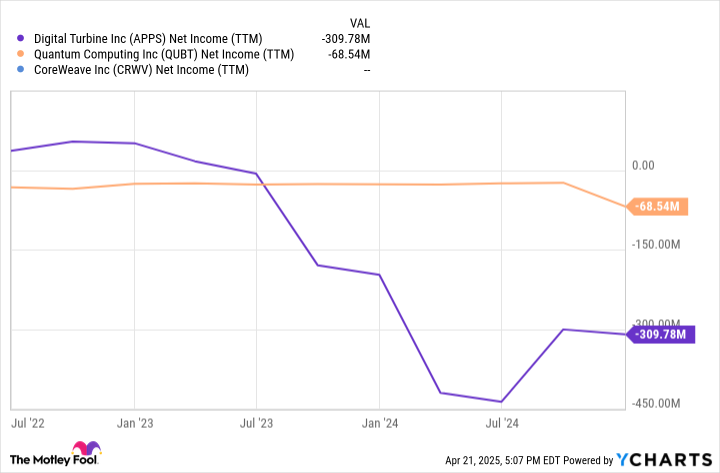
Tech companies, especially those with less stable financial standings, bore the brunt of the sell-off. Digital Turbine (NASDAQ: APPS), Quantum Computing (NASDAQ: QUBT), and CoreWeave (NASDAQ: CRWV) were among the hardest hit, with steep declines observed in their stock values. Digital Turbine’s shares fell as much as 10.9% at one point, while Quantum Computing and CoreWeave saw similar dips, at 10.1% and 14.2% respectively, before ending the day down 6.4%, 8.4%, and 9.6%. These significant drops underscore the heightened volatility and risk aversion currently gripping the market.
Macroeconomic Pressures Amplify Market Volatility
The current financial turbulence is intensified by several external factors. The U.S. dollar has weakened substantially, dropping 1% on Monday and cumulatively down approximately 10% for the year. This decline diminishes American purchasing power globally, further compounded by tariffs that are set to inflate prices across the board. Moreover, U.S. yields have risen, increasing the cost of borrowing for both companies and the government. Higher yields, while potentially an instrument to control inflation, present an additional economic hurdle.
High-Beta Stocks and Financial Challenges
The day’s significant downturn among tech stocks can be attributed to their high beta nature. These stocks typically experience amplified fluctuations relative to broader market movements. The lack of profitability in companies like Digital Turbine, Quantum Computing, and CoreWeave makes them particularly vulnerable to market declines. In uncertain economic climates, investors often shy away from high-risk ventures, preferring companies with stable cash flows and solid balance sheets.

Uncertainty continues to plague investors, particularly concerning ventures with unstable financial foundations. The market’s apprehension towards unprofitable companies is evident, as the willingness to invest in such stocks has waned significantly.
The Path Forward for Technology Stocks and the Economy
With the economic outlook clouded by potential tariff-induced contractions in consumer spending and curtailed expansion plans due to elevated borrowing costs, the stock market continues to search for clarity. Significant swings in the dollar and yields reflect shifting perceptions of financial safety and introduce volatility. This shifting landscape suggests a reduced appetite for riskier investments, particularly in companies that are yet to achieve profitability.
As the market recalibrates, there is potential for high-quality, financially sound companies to seize opportunities through acquisitions or share buybacks amid the downturn. Investors may find strategic entry points in such firms that are better equipped to navigate the current climate.
For ongoing updates and market insights, be sure to follow fintechfilter.com for the latest in financial news and analysis.