

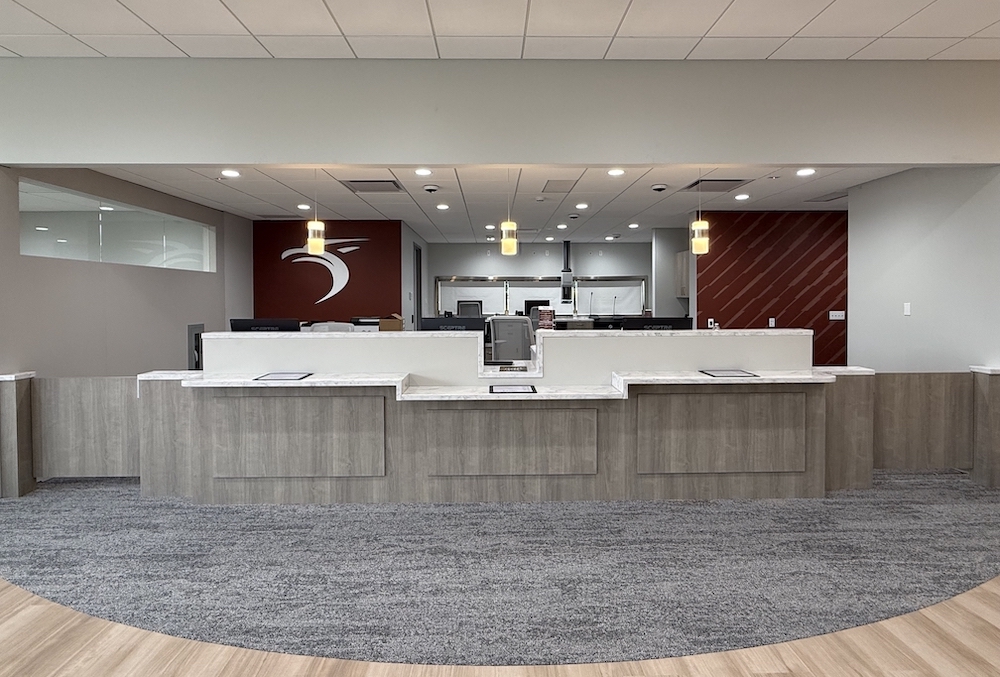
Native American Bank Launches First Washington Branch
Native American Bank has officially opened its first retail branch in Washington state, signaling a major expansion into the Pacific Northwest. The new branch, located in Quil Ceda Village on the Tulalip Reservation, represents a strategic move to strengthen the bank’s presence in a region home to nearly half of all federally recognized tribes in the United States.
The Tulalip branch complements the bank’s existing commercial lending office in Issaquah, giving Native American Bank a broader platform to serve 11 tribal communities within a 50-mile radius. Ed Davis, the Pacific Northwest market president, emphasized the importance of the location, stating, “This is a significant location in terms of access to the market and Puget Sound itself.”
Support from Tribal Leadership
The expansion has been met with enthusiasm from tribal leaders. Teri Gobin, chairwoman of the Tulalip Tribes, expressed pride in hosting the bank on reservation land. “Their longstanding support for economic well-being and sovereignty for Tribal nations and organizations is deeply appreciated,” she said. “We look forward to their success to support our future generations.”
Strategic Growth in Indian Country
The bank’s regional strategy targets Alaska, Washington, Oregon, Idaho, and Northern California—areas that collectively include almost 50% of the nation’s federally recognized tribes and more than 200 Alaska Native corporations. Since its congressional charter in 1998, Native American Bank has dedicated 95% of its operations to Indian Country.
CEO Tom Ogaard highlighted the bank’s unique capabilities in handling trust land transactions, a complex area that many large financial institutions tend to avoid. “Federal trust land is a completely different element, and it’s one that’s not easily navigated,” Ogaard explained.
Branch Features and Services
The Tulalip branch occupies a 4,700-square-foot facility, with an additional 1,500 square feet allocated for a drive-thru canopy. The building is leased from the Tulalip Tribes and currently employs six staff members, with plans to expand as demand grows.
The branch offers a full suite of financial services, including:
- Retail banking: checking, savings, money market accounts, certificates of deposit (CDs), as well as online and mobile banking
- Consumer lending: secured and unsecured loans
- Tribal and commercial banking and lending, with a minimum loan size of $100,000
- Cannabis industry banking services
- Community Reinvestment Act (CRA) and social impact deposit products
Pacific Northwest Lending Pipeline
Native American Bank entered the Pacific Northwest market in September 2023 through its Issaquah office, focusing on commercial lending for tribal enterprises in construction, real estate, and equipment finance. Ed Davis noted that a significant portion of the bank’s work in the region involves bridge and construction financing.
Currently, the bank boasts a $120 million lending pipeline in the Pacific Northwest. In addition to direct lending, Native American Bank partners with Native community development financial institutions (CDFIs) to fund large-scale projects.
Earlier this year, the bank collaborated with four Native CDFIs to provide a $5.2 million bridge loan to Metlakatla Power & Light. The funds supported a broadband and energy infrastructure initiative for the Metlakatla Indian Community on Annette Island, Alaska. Participating organizations included Spruce Root (Juneau, Alaska), Nimiipuu Fund (Lapwai, Idaho), Nixyáawii Community Finance Services (Pendleton, Oregon), and Oweesta Corporation (Longmont, Colorado).
Commitment to Community and Education
For many Native communities, access to traditional banking services has been limited. The physical presence of a local branch is crucial in building trust and providing accessible services. Ogaard emphasized that face-to-face interaction is a key component of relationship-building in tribal communities, where digital-only banking often falls short.
In addition to expanding access, the bank is actively involved in financial literacy initiatives. These programs aim to address the distrust that many reservation-based communities have toward traditional financial institutions.
Looking ahead, Native American Bank plans to open additional branches in South Puget Sound and the Olympic Peninsula to further its mission of supporting tribal sovereignty and economic self-sufficiency.
The Tulalip branch will celebrate its official grand opening on September 30, marking a milestone in the bank’s ongoing commitment to Indian Country.
This article is inspired by content from Original Source. It has been rephrased for originality. Images are credited to the original source.