

South Korea’s Trade Deal Sparks Economic Fears
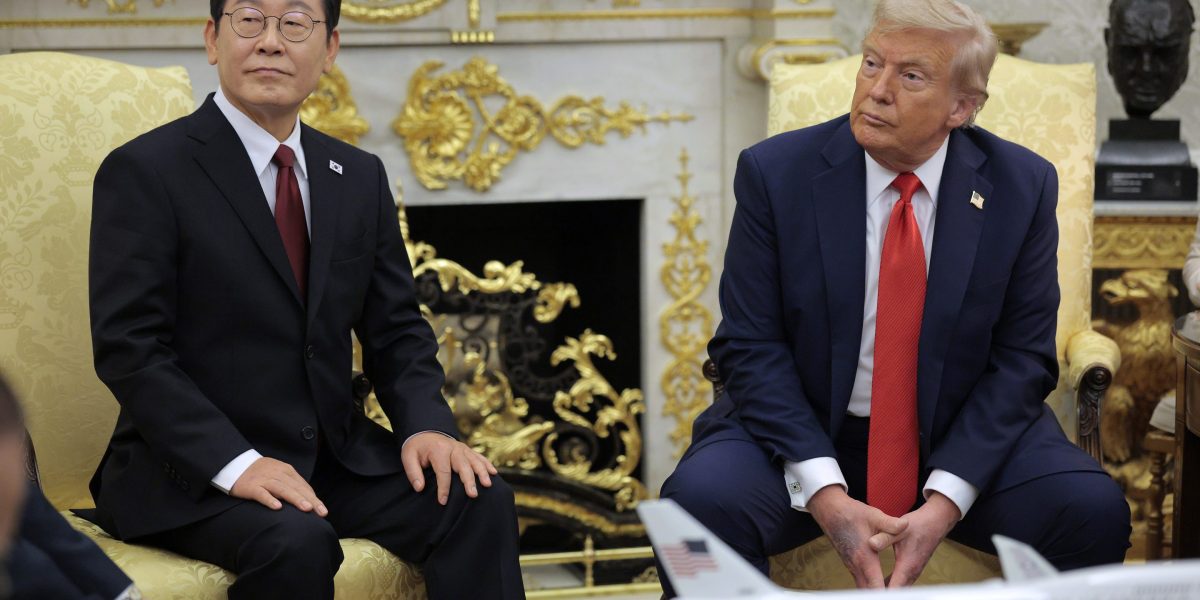
South Korea’s recent trade agreement with the United States, driven by former President Donald Trump, is raising alarm bells among economic experts and South Korean officials. The deal involves a massive $350 billion investment from Seoul in exchange for a reduced U.S. tariff rate of 15%. However, the specifics of the agreement remain under intense negotiation, and tensions are surging as Washington pushes for immediate cash transfers.
Trump Administration’s Demands Raise Red Flags
Commerce Secretary Howard Lutnick has insisted that South Korea comply with terms similar to those accepted by Japan in a previous deal. This includes the swift transfer of funds once U.S. investment approvals are granted. But South Korean President Lee Jae-myung has issued stark warnings about the potential consequences of meeting such requirements without necessary safeguards.
“Without a currency swap, if we were to withdraw $350 billion in the manner that the U.S. is demanding and to invest this all in cash in the U.S., South Korea would face a situation as it had in the 1997 financial crisis,” President Lee told Reuters.
A Fragile Currency and Limited Reserves
South Korea’s concern stems from its relatively modest foreign exchange reserves of $410 billion. Unlike Japan’s yen, the Korean won is not a globally dominant currency. A sudden outflow of $350 billion could severely destabilize the won and send financial markets into turmoil. Analysts fear that such a shock could mirror the devastating 1997 Asian financial crisis, during which South Korea required an emergency bailout from the International Monetary Fund.
Japan, by contrast, has over $1.3 trillion in reserves and benefits from the yen’s 17% share in global currency markets. The won, by comparison, holds just a 2% market share, making it significantly more vulnerable to abrupt capital movements.
Calls for a Currency Swap with the U.S.
To mitigate the risks, Seoul has called for a currency swap line between the Bank of Korea and the U.S. Federal Reserve. Such an arrangement would provide Korea with access to U.S. dollars without having to deplete its reserves, thus preventing a market panic. However, there has been no indication that Washington is willing to agree to such terms.
Despite Seoul’s repeated appeals, Trump has held firm. Speaking last Thursday, he said that South Korea must pay the $350 billion “upfront,” dismissing the idea of staggered payments or alternative financial arrangements.
Domestic and Diplomatic Strain
The impasse is straining diplomatic relations between the two allies. Over the weekend, South Korea’s national security advisor Wi Sung-lac reiterated the country’s inability to fulfill the U.S. demand.
“Our position is not a negotiating tactic. It is objectively and realistically not a level we are able to handle,” he said in an interview with Korean media. “We are not able to pay $350 billion in cash.”
Tensions were further exacerbated earlier this month when U.S. immigration agents raided a Hyundai plant in Georgia, detaining hundreds of Korean workers who were helping prepare the facility for manufacturing operations. The incident occurred just days after President Lee met with Trump at the White House in what was initially seen as a successful diplomatic visit.
Efforts to Calm the Storm
In response to the backlash, Trump stated he did not intend for the raid to scare off foreign investors. A State Department official later expressed regret over the detentions, signaling an attempt to repair the damage. President Lee, for his part, has taken a conciliatory tone, avoiding direct criticism of Trump.
“I do not believe this was intentional, and the U.S. has apologized for this incident,” Lee said. “We have agreed to seek reasonable measures in this regard and we are working on them.”
Still, the broader economic implications of the proposed deal remain unresolved. Analysts warn that unless the U.S. adjusts its expectations or offers financial mechanisms like a currency swap, the fallout could reverberate across global markets and ignite a new financial crisis in Asia.
Looking Ahead
The ongoing negotiations will likely continue to dominate headlines as both nations seek a path forward. With the Fortune Global Forum scheduled for October 26–27, 2025 in Riyadh, many hope that global leaders gathering at the event will urge a more balanced and sustainable solution to the escalating trade tensions.
This article is inspired by content from Original Source. It has been rephrased for originality. Images are credited to the original source.