

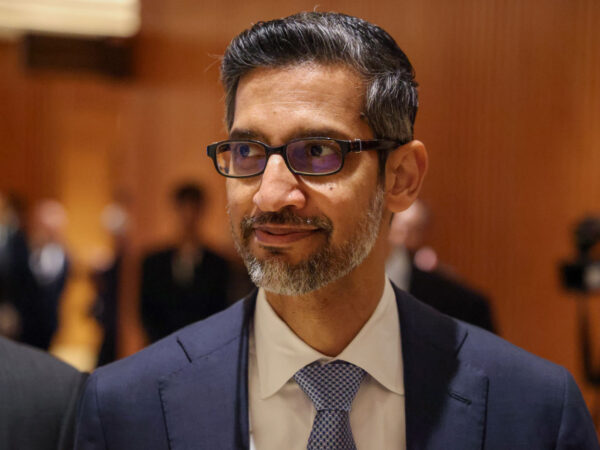
Sundar Pichai: The Quiet Force Behind Alphabet’s AI-First Strategy
Sundar Pichai has emerged as Silicon Valley’s quiet powerhouse, steering Alphabet through a transformative era defined by artificial intelligence. Far from being a headline-seeking executive, Pichai’s leadership is characterized by measured progress and a relentless focus on product execution. As the world’s attention turns toward the explosive potential of AI, Pichai’s vision and approach have positioned Alphabet as a dominant force in the ongoing AI leadership race.
From Humble Beginnings to Tech Titan
Born in Chennai, India, Sundar Pichai’s journey to the helm of Alphabet is a testament to ambition and resilience. Arriving in the United States with a scholarship to Stanford, Pichai later earned his MBA from Wharton. Early stints at Applied Materials and McKinsey & Co. provided a foundation, but it was his entry into Google in 2004 that marked the beginning of a remarkable ascent.
Pichai’s initial work on the Google Toolbar paved the way for his leadership in the development of Chrome, which, under his guidance, went from a 1% market share to becoming the world’s most used browser. His product-centric approach quickly caught the attention of Google’s founders, leading to rapid promotions and increased responsibility over core products like Android, Drive, and later, innovations such as the Pixel smartphone and Google Home.
Steady Leadership in a Changing Landscape
Unlike many of his contemporaries, Sundar Pichai has maintained a reputation for calm, deliberate decision-making. Industry experts note that his style prioritizes continuity and stability, allowing Alphabet’s vast engineering teams to innovate without the disruption of frequent strategic pivots. This approach has enabled Alphabet to evolve into a multi-layered platform business, seamlessly integrating advertising, devices, cloud services, and now, artificial intelligence.
Under Pichai’s stewardship, Alphabet’s market capitalization soared past $4 trillion in early 2026, a milestone reached by only three other companies. His ascent is closely tied to his ability to scale products globally, ensuring that new technologies align with the company’s broader infrastructure and user ecosystem.
Alphabet’s AI-First Shift
The global race for AI leadership has intensified, especially since the debut of OpenAI’s ChatGPT in 2022. While some critics initially viewed Google as slow to react, Pichai had long been laying the groundwork for an AI-driven future. By 2016, he declared Google an “AI-first” company, investing heavily in custom chips, research, and infrastructure. Today, Alphabet’s Gemini AI chatbot boasts over 350 million paid users, and its autonomous vehicle division, Waymo, is expanding rapidly.
Alphabet’s AI prowess is underpinned by its acquisition of DeepMind, breakthroughs in deep learning, and full-stack control over model development and distribution. This vertical integration allows Google to embed AI capabilities directly into existing products, such as Search, Gmail, and YouTube, reaching billions of users without requiring disruptive behavior shifts.
Balancing Innovation with Responsibility
Pichai remains acutely aware of the ethical and operational challenges that come with AI leadership. He advocates for responsible innovation and robust safety systems, especially as AI becomes deeply integrated into fields like healthcare and finance. Recognizing the risks and transformative power of AI, Pichai calls for regulatory frameworks that balance rapid progress with societal safeguards.
His leadership philosophy emphasizes collaboration, both between humans and AI and among global stakeholders—including governments, nonprofits, and academia. Pichai’s goal is to ensure that the benefits of AI are realized responsibly, without undermining the trust and reliability that users associate with Google’s platforms.
The Road Ahead: Challenges and Opportunities
Alphabet’s current position in the AI landscape is stronger than many anticipated, thanks in large part to Pichai’s strategic foresight. The company’s vast distribution channels, years of AI research, and integration across products provide a formidable competitive edge. However, Pichai’s greatest test lies ahead: maintaining the core search business’s dominance while driving a bold transformation powered by artificial intelligence.
“Our capex spend this year is an eye towards the future,” Pichai told investors, referencing Alphabet’s plan to double capital expenditures for AI. This commitment underscores his belief that AI represents a “deep platform shift”—one that will impact every facet of society, from daily work to complex industries.
Conclusion: The Future of AI Leadership
As the AI revolution accelerates, Sundar Pichai’s steady hand and long-term vision continue to shape Alphabet’s trajectory. His unique blend of operational discipline and product insight has allowed the company to innovate at scale while retaining user trust. The story of Sundar Pichai and Alphabet’s AI leadership is far from over; in fact, their most transformative years may still be ahead.
This article is inspired by content from Original Source. It has been rephrased for originality. Images are credited to the original source.