

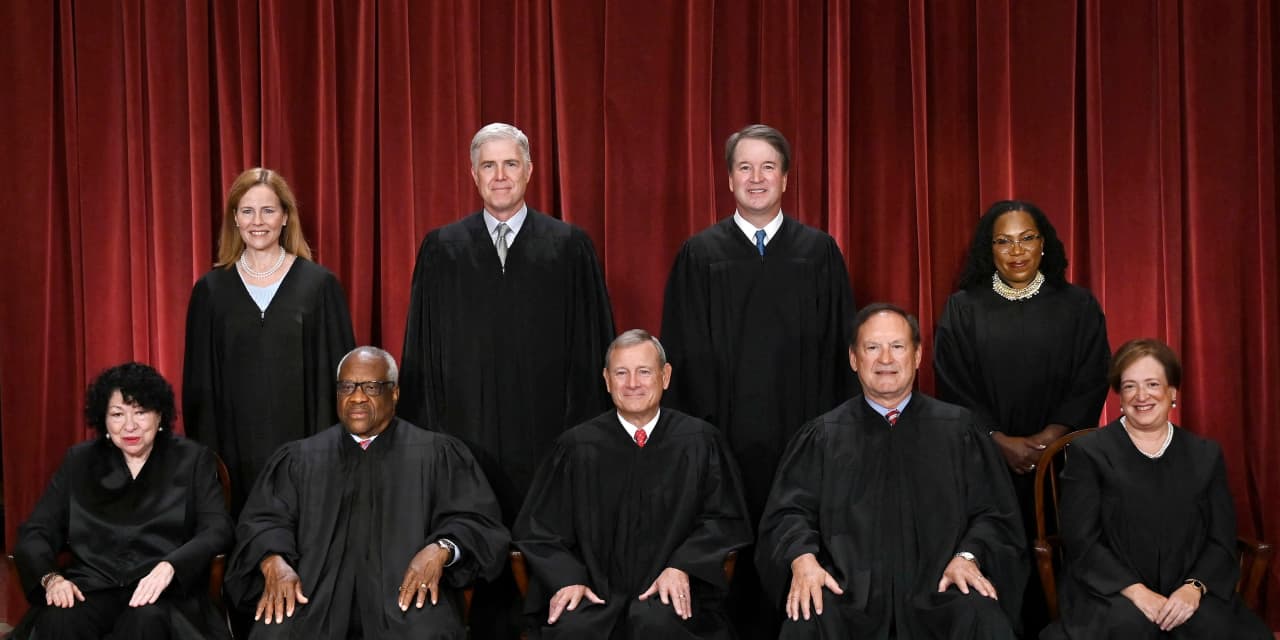
The Supreme Court’s Crucial Role in Preventing Financial Chaos
In recent weeks, the United States stood perilously close to a financial crisis that most Americans never saw coming. The actions of the Supreme Court, particularly Chief Justice John Roberts and Justice Brett Kavanaugh, played a decisive part in steering the nation away from the brink. This episode underscores how the stability of the US financial system can hinge on unexpected factors, and why understanding the threats to financial stability is so critical.
Understanding the Threat to Financial Stability
At the heart of the recent crisis was a Supreme Court case that could have devastated the Consumer Financial Protection Bureau (CFPB), an agency created after the 2008 financial meltdown to safeguard consumer interests and maintain order in the financial system. The case, known as Consumer Financial Protection Bureau v. Community Financial Services Association of America, challenged the constitutionality of the CFPB’s funding structure. If the Court had ruled against the CFPB, it could have rendered the agency—and its extensive consumer protections—essentially powerless.
Why does this matter for ordinary Americans? The CFPB oversees everything from credit cards and mortgages to payday loans and bank fees. Without it, predatory practices could proliferate, and consumer recourse would be severely limited. The potential for chaos in the financial markets, consumer confusion, and widespread economic fallout was immense. The focus_keyword, financial crisis, was not just a theoretical risk; it was a looming reality.
How the Supreme Court Prevented Disaster
In a narrow decision, the Supreme Court sided with the CFPB, preserving its funding mechanism and allowing it to continue its work. Chief Justice John Roberts and Justice Brett Kavanaugh, both appointed by Republican presidents, cast decisive votes in favor of financial stability. Their decision was a relief to regulators, market participants, and millions of consumers who rely on the protections provided by the CFPB.
This outcome maintained confidence in the financial system, prevented a regulatory vacuum, and kept in place critical safeguards that help prevent another financial crisis. It’s a stark reminder that even in a nation with robust institutions, the safety of the financial sector can rest on the decisions of a few individuals in the highest court.
The Hidden Dangers of Judicial Decisions
Most Americans may not pay close attention to Supreme Court rulings unless they dominate headlines, but financial professionals and regulators were acutely aware of what was at stake. A ruling against the CFPB could have unleashed waves of litigation, rolled back years of consumer protections, and left the sector vulnerable to reckless and even fraudulent practices. In such an environment, the risk of a financial crisis would have soared, threatening savings, investments, and the broader economy.
Financial crises often begin not with dramatic events, but with the slow erosion of trust and oversight. The Supreme Court’s intervention averted such an outcome, but the episode serves as a warning: the mechanisms that keep the financial system stable can be surprisingly fragile. It is vital for both policymakers and the public to remain vigilant and informed about the complex web of regulations that underpin everyday financial transactions.
Protecting the Future: Lessons Learned
What can be learned from this near-miss? First, the importance of robust regulatory agencies like the CFPB cannot be overstated. Second, the structure and independence of these agencies matter greatly; efforts to undermine them, even on technical grounds, can have far-reaching consequences. Finally, the Supreme Court’s role in interpreting the Constitution has direct, sometimes immediate, consequences for financial stability and the risk of another financial crisis.
For investors, savers, and consumers, this episode is a reminder to stay engaged with financial news and regulatory developments. While most Americans may have been unaware of how close the country came to upheaval, those who pay attention can better protect their financial interests in the future.
Conclusion: Vigilance Is Essential for Financial Stability
The Supreme Court’s decision to uphold the CFPB’s funding structure was more than a legal technicality—it was a bulwark against potential financial crisis that could have affected millions. As the financial landscape continues to evolve, the need for strong oversight and public awareness remains as important as ever. By understanding the risks and recognizing the significance of pivotal legal decisions, Americans can help ensure a more stable financial future.
This article is inspired by content from Original Source. It has been rephrased for originality. Images are credited to the original source.