

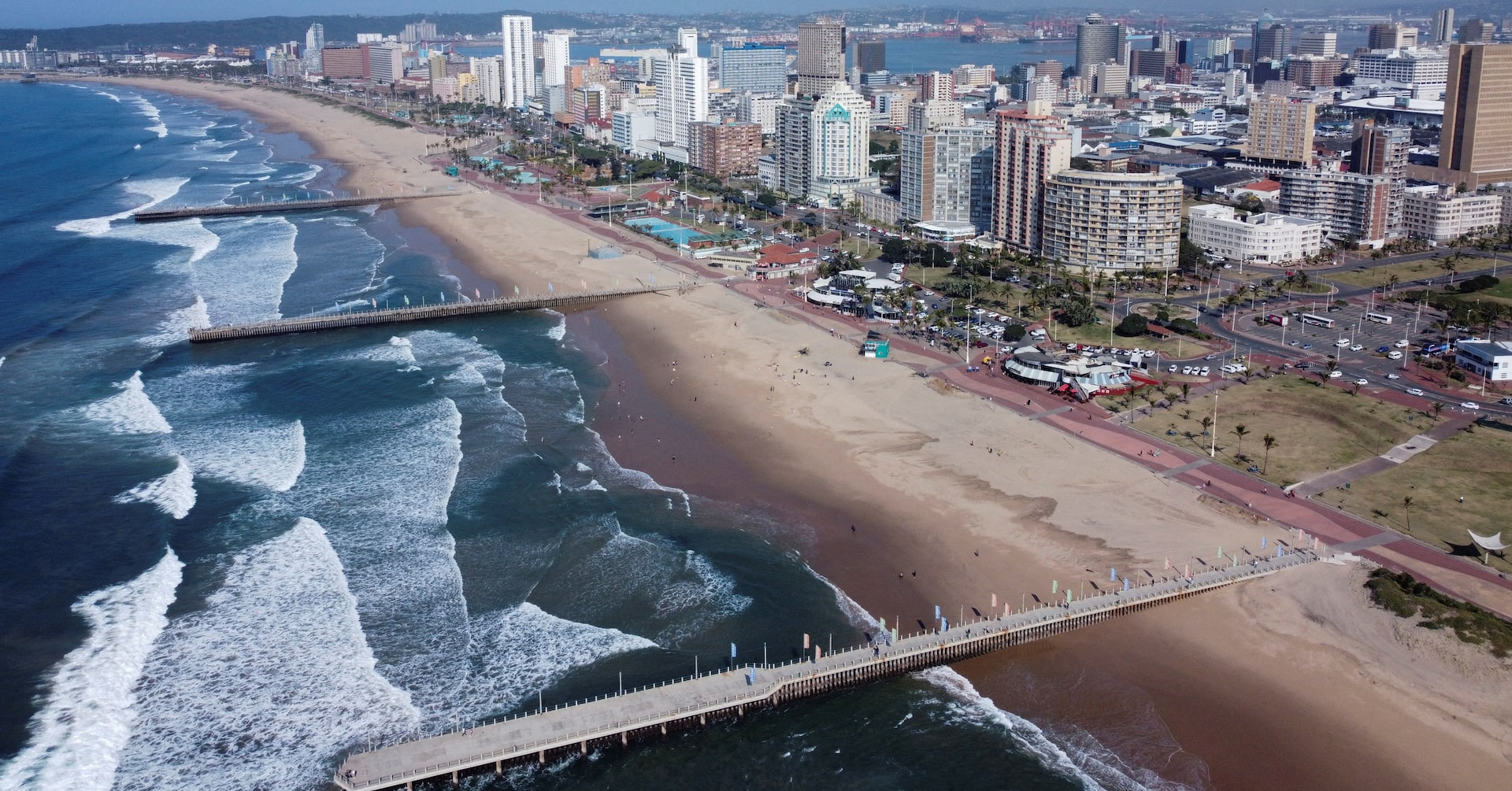
G20 Finance Ministers Gather Amid Rising Trade Tensions
The G20 finance ministers and central bankers convened in Durban, South Africa, on Thursday, facing growing uncertainty spurred by former U.S. President Donald Trump’s renewed tariff threats. South Africa, hosting the event under the theme “Solidarity, Equality, Sustainability,” called on member nations to exercise cooperative leadership in addressing global economic challenges.
South Africa’s Finance Minister, Enoch Godongwana, emphasized the importance of multilateralism in his opening remarks. “We have a critical role to play in revitalizing and strengthening multilateralism by fostering inclusive dialogue, reinforcing rules-based cooperation and driving collective action in global challenges that no country can solve alone,” he stated. He urged bold leadership to navigate complex global issues such as trade disruptions and climate change.
Leadership Gaps and Absent Delegates
Despite the urgency of global coordination, several key figures are absent from the Durban meeting. U.S. Treasury Secretary Scott Bessent skipped the conference, marking his second notable absence from a G20 event in South Africa this year. Instead, Michael Kaplan, acting undersecretary for international affairs, represented the United States.
This absence comes at a pivotal moment, as the U.S. prepares to assume the G20 presidency at the end of the year. Other notable absentees include finance ministers from India, France, and Russia. The trend has raised concerns about the effectiveness of the gathering.
However, South Africa’s central bank governor, Lesetja Kganyago, downplayed the impact of these absences, emphasizing the importance of representation. “What matters is, is there somebody with a mandate sitting behind the flag and are all countries represented with somebody sitting behind the flag?” he told Reuters.
Trump’s Tariff Threats Cast a Long Shadow
The specter of renewed trade barriers looms over the summit. Trump’s proposed tariffs include a baseline 10% levy on all U.S. imports, with targeted tariffs up to 50% on steel and aluminum, 25% on automobiles, and potential charges on pharmaceuticals. These tariffs, affecting over 20 countries, are set to take effect on August 1.
Of particular concern is Trump’s threat to impose additional 10% tariffs on BRICS nations, eight of which are G20 members. The move risks further fragmenting the already strained global economic environment.
Joachim Nagel, president of Germany’s Bundesbank, warned that such tariffs could have serious consequences. He noted that Germany’s projected 0.7% economic growth for 2025 could be wiped out entirely if the proposed 30% tariffs materialize. “If tariffs materialize in August, a recession in Germany in 2025 cannot be ruled out,” Nagel said.
Trump’s vocal criticism of U.S. Federal Reserve Chair Jerome Powell has also raised eyebrows. Nagel emphasized the importance of central bank independence, a principle increasingly under pressure amid political interference.
Hopes for a Unified G20 Communique
Amid these challenges, South Africa is working to secure a joint communique from the meeting — something the G20 has struggled to produce in recent years due to geopolitical tensions. The last successful communique was issued a year ago.
Duncan Pieterse, Director General of South Africa’s Treasury, expressed cautious optimism. “We are hopeful that we can achieve consensus on a communique that reflects shared goals and priorities,” he said. The communique would mark a significant achievement under South Africa’s G20 presidency.
The G20 was originally formed to coordinate global economic policy in the wake of the 2008 financial crisis. However, in recent years, its decision-making capacity has been weakened by internal divisions, particularly due to the ongoing Russia-Ukraine conflict and tensions between the West and Moscow.
Looking Ahead to the U.S. Presidency
As the United States prepares to take over the G20 presidency, expectations are high. Sources indicate that Washington plans to streamline the summit’s schedule and reduce the number of non-financial working groups to focus on core economic issues. However, U.S. officials have been tight-lipped about the specific priorities and initiatives they plan to pursue.
The Durban meeting comes at a critical juncture for the global economy. With inflation, debt, and climate change on the agenda, the hope is that the G20 can still serve as a forum for meaningful cooperation despite its challenges.
This article is inspired by content from Original Source. It has been rephrased for originality. Images are credited to the original source.