

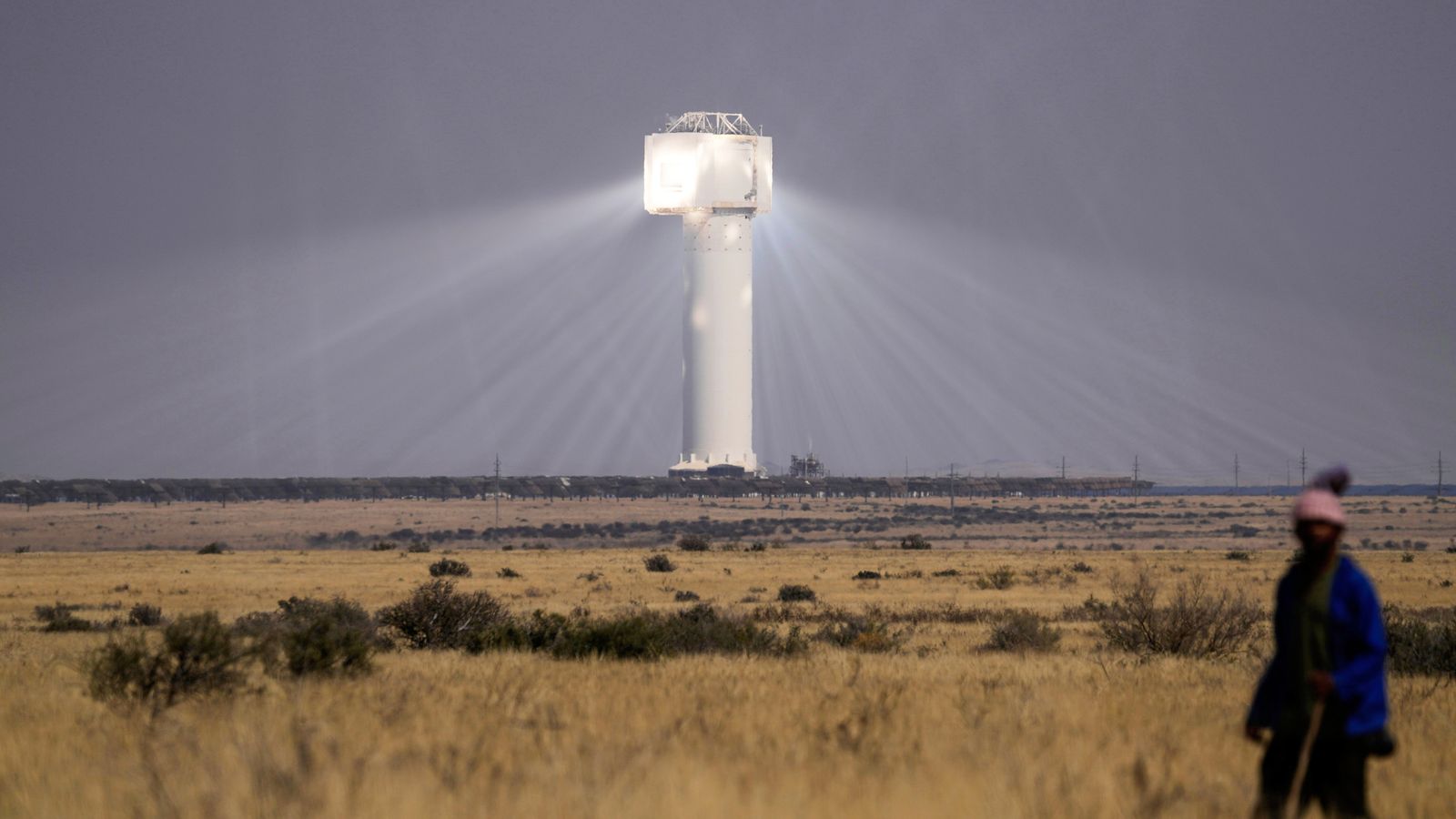
African Clean Energy Projects Face Financial Roadblocks
Despite billions of dollars pledged for Africa’s clean energy transition, a significant number of renewable energy projects remain stalled. The primary hurdle is the challenge of credit rating barriers, a financial obstacle that has made it difficult for African nations to secure affordable funding for their green initiatives. The impact of restrictive international credit rating rules is being felt across the continent, threatening the pace and scale of Africa’s shift to sustainable energy sources.
The Sovereign Ceiling Rule and Its Impact
One of the main hurdles for African clean energy projects is the so-called sovereign ceiling rule. This financial rule links the creditworthiness of a project directly to the country’s sovereign credit rating. As a result, even commercially viable renewable energy projects inherit the perceived risks of the nation in which they are located, regardless of their own financial fundamentals.
Of Africa’s 54 countries, only Botswana and Mauritius hold investment-grade sovereign ratings. This reality means that most clean energy projects are considered higher risk by international investors, leading to inflated financing costs and limited access to vital capital. The International Energy Agency reports that almost 600 million Africans still lack access to electricity, making affordable financing for energy projects more urgent than ever.
How Credit Ratings Affect Project Financing
Experts emphasize that the sovereign ceiling rule creates a substantial barrier to investment. Dr. John Asafu-Adjaye, a senior fellow at the African Center for Economic Transformation, highlights how projects with strong cash flow and long-term agreements are penalized simply due to their location. “A project with strong fundamentals, a long-term power purchase agreement and predictable cash flow ends up being priced as if it were inherently dangerous. Not because it is, but because of where it sits on a map,” he explained.
Because of these credit rating barriers, projects like Kenya’s Menengai Geothermal Project, Zambia’s Solar Scaling Programme, and Nigeria’s Solar IPP pipeline have struggled to attract sufficient investment. Analysts say that financing costs for African renewable energy ventures can be two to four times higher than comparable projects in Europe or North America.
The Broader Economic Costs
The high cost of capital has a tangible effect on African economies. According to the United Nations Development Program, subjective credit rating assessments cost African nations up to $74.5 billion annually in lost investment opportunities and increased borrowing costs. This burden slows down the continent’s progress toward expanding electricity access and meeting climate commitments under the Paris Agreement.
Dr. Sibusisi Nkomo, program director at the University of Cambridge Institute for Sustainability Leadership’s Africa Program, notes, “International credit rating systems often overstate risk relative to actual project fundamentals, leading to inflated risk premiums and higher costs of capital.”
Credit Ratings and Access to Bond Markets
International credit rating agencies like Moody’s, S&P, and Fitch play a decisive role in shaping investor perceptions of African markets. Their ratings often limit access to bond markets, which are crucial for funding large-scale infrastructure and energy projects. For many African governments, securing financing for solar, wind, and energy transmission projects is critical for economic growth and industrialization.
Malango Mughogho, managing director of ZeniZeni, underscores the importance of electricity for development but points out that the current financing model—dominated by loans—can be unsustainable for many countries. Maria Nkhonjera, a climate and finance specialist at the Stockholm Environment Institute, adds that credit ratings and poor risk assessment further inflate the costs, even for projects with low default rates.
Potential Solutions and the Path Forward
While credit rating barriers remain a major challenge, experts see opportunities for improvement. Expanding access to low-cost finance, increasing local-currency lending, and reforming the international debt system could all help lower borrowing costs for African clean energy projects. Multilateral institutions such as Afreximbank and the Trade and Development Bank are poised to play a larger role by providing guarantees and credit enhancements that could help separate project risk from sovereign risk.
Dr. Asafu-Adjaye concludes, “In many African countries, the cost of capital is now one of the most important determinants of the pace of economic transformation. Fixing that system is not peripheral to the development agenda. It is central to it.”
Conclusion: Overcoming Credit Rating Barriers for Clean Energy
The challenge posed by credit rating barriers is at the heart of Africa’s clean energy financing struggles. Overcoming this obstacle is essential for unlocking the continent’s renewable energy potential, ensuring economic growth, and expanding access to electricity for millions. As stakeholders seek solutions, reforming credit rating practices and increasing support from international and regional institutions will be key to Africa’s sustainable energy future.
This article is inspired by content from Original Source. It has been rephrased for originality. Images are credited to the original source.