

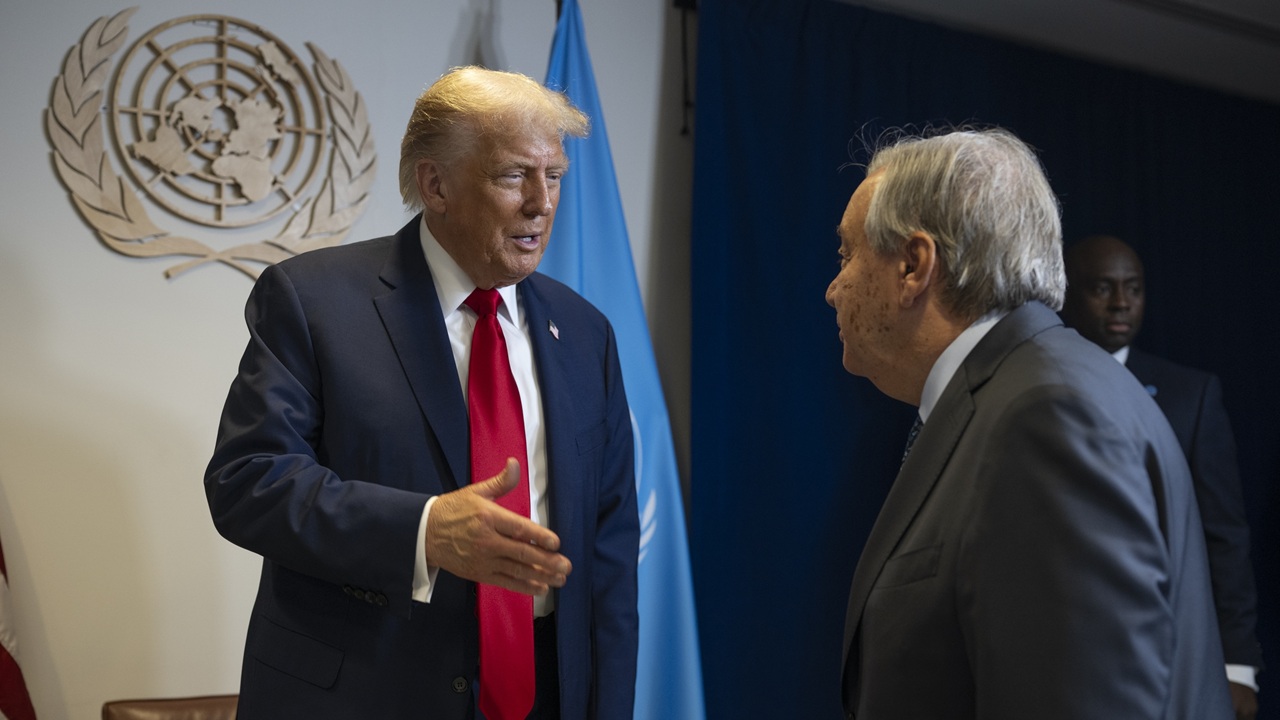
United States Uses Financial Influence to Reshape UN Budget
The United States has effectively used its financial leverage to prompt significant budgetary reforms at the United Nations. Under President Donald Trump’s administration, the U.S. suspended contributions to the UN’s regular budget early in his second term. This bold move triggered a liquidity crisis for the world body, compelling UN Secretary-General Antonio Guterres to implement sweeping cost-cutting measures, initiate structural reforms, and reassess UN operations.
In December, the UN approved the largest budget reduction in its history, a direct result of sustained U.S. financial pressure and diplomatic engagement. The reform package includes significant staff cuts and operational streamlining, aligning with long-standing American demands for increased accountability and efficiency within the organization.
Historic Budget Cuts and Staff Reductions
The UN’s 2026 budget stands at $3.45 billion, down from $3.72 billion in 2025—a $270 million reduction. This marks the most substantial cut in both absolute and percentage terms in the UN’s history. Over 2,900 staff positions have been abolished through a combination of eliminating vacancies, voluntary separations, and outright terminations.
The reforms also empower the International Civil Service Commission (ICSC) to explore ways to narrow the compensation gap between UN employees and their U.S. government counterparts. Additionally, the Office of Internal Oversight Services (OIOS) has been granted greater discretion in targeting high-priority investigations.
Other cost-saving measures include reduced funding for UN capital projects, particularly the renovation of facilities in Nairobi. The budget for the controversial Human Rights Council has also been curtailed, along with several Special Political Missions. Unnecessary roles, such as special envoys for Cyprus and the Republic of Georgia, have been consolidated or eliminated.
These changes are projected to reduce member state contributions by an estimated $570 million. The United States alone will save approximately $125 million, a development hailed as a fiscal victory for American taxpayers.
Challenges Remain for Deeper Reform
Despite this success, U.S. officials acknowledge that much more needs to be done. The current reforms represent the first phase of a broader agenda, known as UN80, which seeks to overhaul the UN’s operational and financial frameworks.
UN80 includes three main “workstreams.” The first, which focused on budget reductions, has been partially implemented. The second involves a comprehensive review of nearly 4,000 mandates to determine their ongoing relevance. Previous attempts to review mandates have failed, highlighting the difficulty of achieving consensus among member states.
The third workstream aims to consolidate various UN funds and programs to reduce bureaucratic duplication and enhance operational efficiency. This component is expected to face substantial opposition from entrenched interests within the UN system.
In October, the U.S. also pushed for a 15 percent reduction in funding for UN peacekeeping missions, including a 25 percent cut in personnel. Making these reductions permanent will require intense negotiations in the months ahead.
Executive Orders and Incentive-Based Diplomacy
President Trump recently signed an executive order halting U.S. funding for several UN departments and activities deemed ineffective or redundant. American officials argue that these programs should be permanently removed from the UN’s regular budget.
While financial pressure has proven effective, experts caution that a balance of incentives and penalties is essential for long-term reform. The U.S. is encouraged to reward the UN for its recent compliance by paying off $435 million in outstanding contributions from 2024. Such a gesture would alleviate financial strain on the organization and signify that the U.S. is negotiating in good faith.
Looking forward, the administration is advised to work closely with Congress to tie future payments for 2025 and 2026 to specific reform goals. These could include reducing the U.S. peacekeeping assessment to 25 percent, aligning UN salaries with U.S. civil service benchmarks, and advancing the remaining elements of the UN80 agenda.
This approach mirrors the successful Helms-Biden Act from the late 1990s, which linked U.S. financial contributions to concrete reforms. As history has shown, combining tough love with strategic incentives can yield lasting improvements in international institutions.
This article is inspired by content from Original Source. It has been rephrased for originality. Images are credited to the original source.