

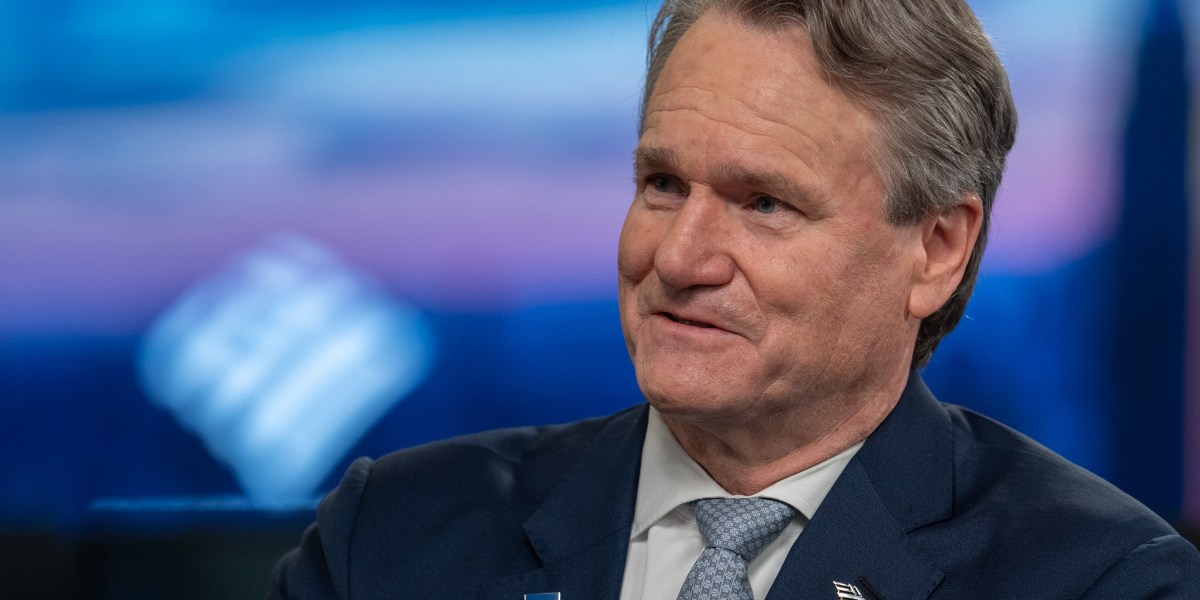
Bank of America Targets Wealth Management Expansion
Bank of America is setting its sights on a booming opportunity within the U.S. wealth management sector, with CEO Brian Moynihan outlining ambitious growth targets at the company’s first investor day since 2011. The event, held in Boston on November 5, highlighted the bank’s strategy to expand its footprint in wealth and investment management, particularly among the ultra-high-net-worth demographic.
“There is a huge opportunity in the U.S. wealth business,” Moynihan said during a press roundtable. He pointed out that the U.S. is home to over 20 million millionaires, dwarfing China’s approximately 6 million.
Preparing for the Great Wealth Transfer
One of the major catalysts behind Bank of America’s renewed focus on wealth management is the impending Great Wealth Transfer. This massive intergenerational transition is expected to shift between $84 trillion and $124 trillion from Baby Boomers to their heirs and charitable causes by the mid-2040s. The bank views this as a significant moment that will reshape the financial services landscape and redefine family legacies.
With this in mind, the bank announced targets of 4% to 5% net new asset growth in its Merrill Wealth Management unit over the next three to five years. The aim is to grow revenue at nearly twice the rate of expenses, and to increase the return on allocated capital to 30% across the segment.
Capturing Market Share with a Personal Touch
Bank of America currently holds a 14% market share in the ultra-high-net-worth category. According to Katy Knox, president of Bank of America Private Bank, the institution’s national coverage spans 90% of the domestic wealth opportunity. “We are aligning resources to capture it,” she emphasized during the investor event.
The bank’s approach combines institutional strength with a personalized, localized service model. Lindsay Hans, co-president of Merrill Wealth Management, described the strategy as one that leverages both scale and individualized attention. “Our model combines institutional power with a personal, local approach,” she explained.
Building a Strong Advisor Network
Central to Bank of America’s expansion strategy is its advisor development program, which seeks to recruit and train a new generation of wealth advisors. The bank currently boasts a force of around 15,000 advisors. Moynihan highlighted recruitment as a key driver of organic growth and emphasized the importance of comprehensive training for new hires.
“The training program is as big as most of the other firms in the business,” Moynihan stated, noting that success in wealth advising requires significant energy, talent, and capability. The advisor training pipeline is designed to help new employees progress from foundational skills to more advanced roles over time.
Leveraging AI for Client Engagement
To further enhance advisor effectiveness and attract younger talent, Bank of America is increasingly integrating artificial intelligence into its operations. Moynihan indicated that AI tools could streamline client development, particularly in the early stages of an advisor’s career. “They’ve got to build a book, and then grow that book,” he explained.
One such AI-driven initiative is Merrill’s Advisor Match program, which uses algorithms to connect clients with advisors based on preferences and advisor profiles. This tool aims to improve referral accuracy and foster stronger client-advisor relationships.
Boosting Financial Performance Targets
In a sign of its confidence, Bank of America revised its medium-term target for return on tangible common equity (ROTCE) to a range of 16% to 18%, up from its previous “mid-teens” guidance. This metric reflects how effectively the bank utilizes its tangible assets to generate profit. In Q3, the bank posted a ROTCE of 15.4%, compared to JPMorgan Chase’s 20%.
Analysts have responded positively to the updated targets. Christopher McGratty of KBW reaffirmed his “outperform” rating on Bank of America, stating that the new ROTCE goals align well with market expectations.
A Competitive Landscape
Bank of America isn’t alone in its pursuit of wealth management dominance. Rivals such as JPMorgan Chase and Citigroup are also expanding their offerings to attract Millennials, Gen Z clients, and ultra-wealthy families interested in values-based investing and high-tech financial tools.
As competition intensifies, Bank of America’s integrated strategy—combining technological innovation, advisor development, and strategic resource deployment—aims to position the bank as a leader in a rapidly evolving segment of the financial industry.
This article is inspired by content from Original Source. It has been rephrased for originality. Images are credited to the original source.