

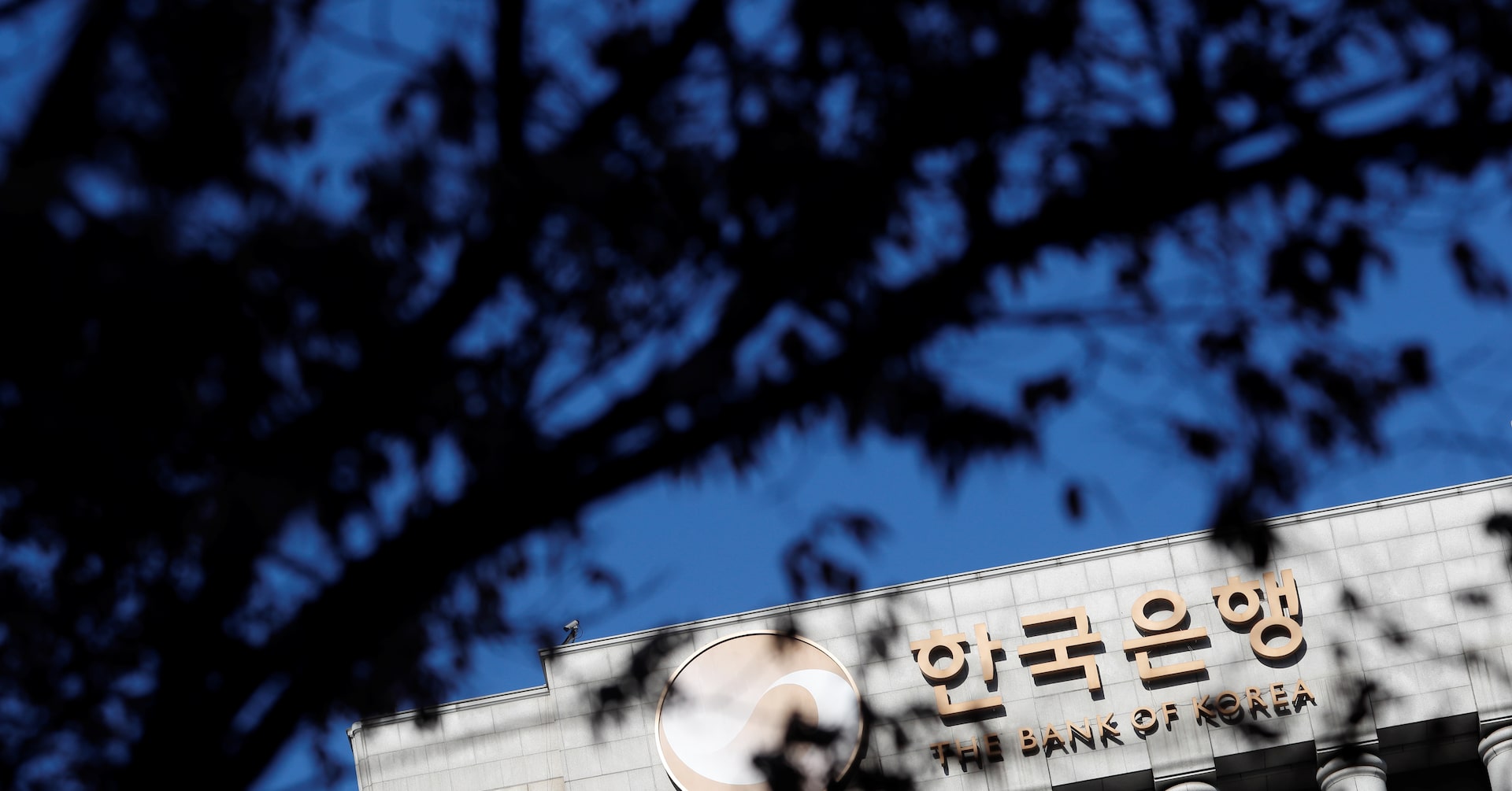
Bank of Korea Warned to Stay Vigilant on Financial Stability
South Korea’s central bank must remain vigilant in managing financial stability risks amid growing market volatility, a board member of the Bank of Korea (BOK) said on Tuesday. Chang Yong-sung, a member of the BOK’s monetary policy board, expressed concern over the increased turbulence in financial and currency markets, particularly emphasizing the depreciation of the won and rising housing prices.
“Volatility is increasing in financial and foreign exchange markets with sharp fluctuations in stock prices and comparative weakness in the won,” Chang stated in a commentary released alongside the BOK’s semiannual financial stability report.
Won Hits Lowest Level in Months
The South Korean won fell to 1,483.5 per U.S. dollar on Tuesday, marking its weakest level since early April. The currency has depreciated by more than 8% in the second half of 2025, intensifying concerns about its impact on the broader economy.
Chang pointed out that this decline, coupled with sustained increases in housing prices and heightened credit risks in vulnerable sectors, poses a significant threat to the country’s financial stability.
BOK Vows to Closely Monitor Risks
In its latest report, the BOK stated that it would continue to monitor risk factors within the financial system and proactively introduce market-stabilizing measures if required. Despite the recent depreciation, the central bank noted that most indicators of foreign exchange market conditions remained stable.
“We will continue to coordinate monetary policy with macroprudential policies to ensure financial system resilience,” the central bank said in the report.
Interest Rates Held Steady
Last month, the BOK kept its benchmark interest rate unchanged for the fourth consecutive monetary policy meeting. The decision reflects the central bank’s cautious stance as it approaches the potential end of its current rate adjustment cycle. The ongoing weakness of the won has limited the scope for further monetary easing, prompting a more measured approach.
In response to currency depreciation, the central bank has introduced several currency stabilization measures since November. These actions include direct interventions and policy signals aimed at restoring investor confidence and curbing excessive volatility in the exchange market.
Housing Market and Credit Risks Under Scrutiny
Chang Yong-sung also highlighted growing concerns over South Korea’s housing market. Despite efforts to cool down property prices, the market continues to show signs of overheating. Rising home prices could lead to imbalances and create vulnerabilities in the financial sector, especially if coupled with high household debt levels.
“High credit risks are present in some vulnerable sectors where borrowing has surged significantly. We must remain cautious and implement policies that address these issues proactively,” Chang emphasized.
According to the BOK, household debt remains elevated, and lending standards have tightened in response to regulatory measures. However, the central bank underscored the importance of remaining alert to any signs of financial distress that could arise if economic conditions deteriorate further.
Next Policy Meeting Scheduled for January
The BOK’s next monetary policy meeting is scheduled for January. Market analysts will closely watch the central bank’s tone and guidance, particularly in light of recent currency movements and global economic trends.
While inflationary pressures have eased somewhat, the central bank remains focused on maintaining price stability and financial soundness. The alignment between monetary and macroprudential policies will be crucial in navigating the challenges posed by external shocks and domestic vulnerabilities.
In summary, the BOK is facing a complex economic environment characterized by currency volatility, rising property prices, and sector-specific credit risks. Officials like Chang are advocating for a prudent and calculated approach to policy-making to safeguard stability in South Korea’s financial system.
This article is inspired by content from Original Source. It has been rephrased for originality. Images are credited to the original source.