

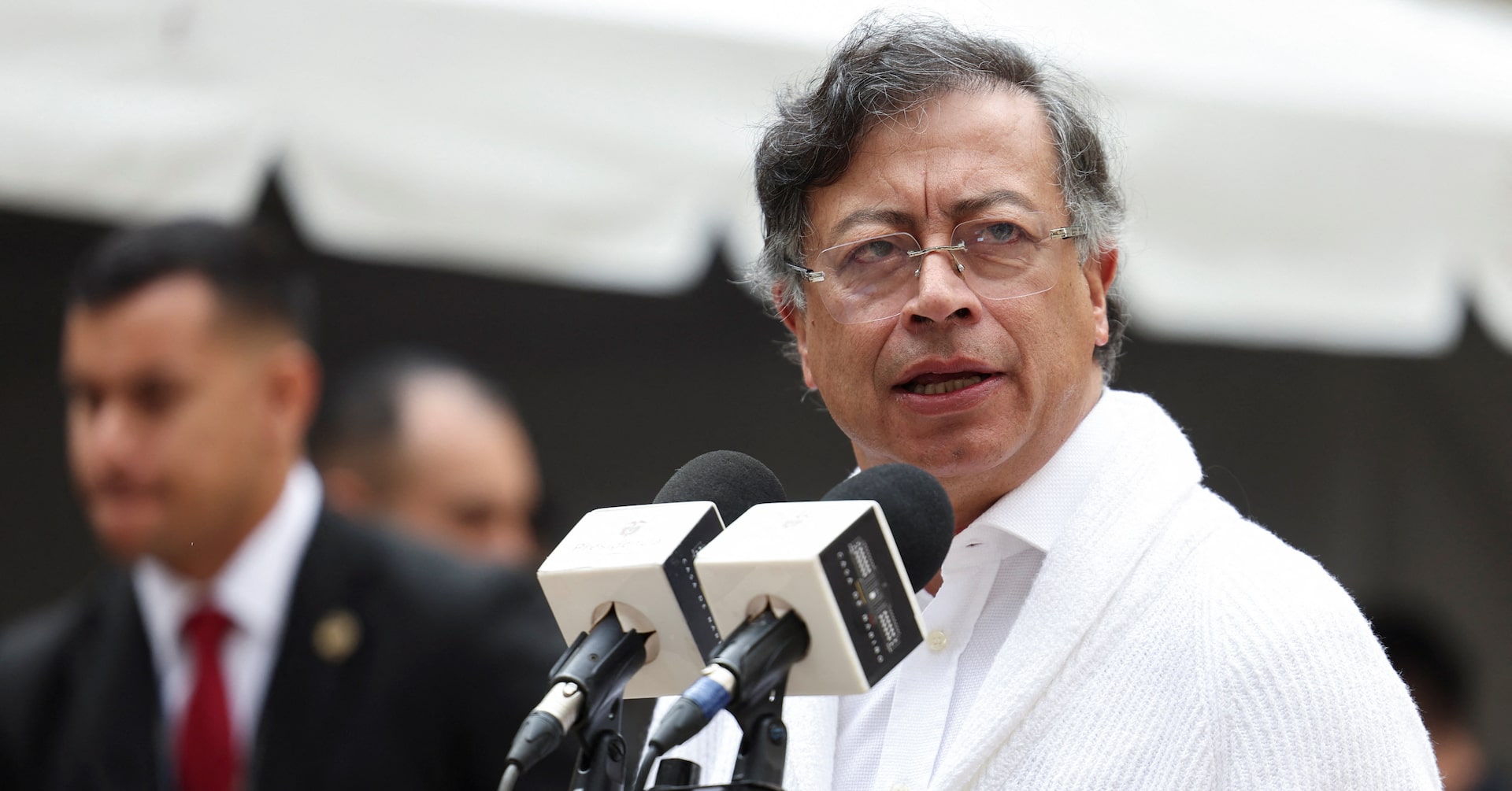
Colombia’s President Petro Proposes Economic Emergency
Colombia’s economic emergency has taken center stage as President Gustavo Petro announced plans to submit an economic emergency decree and a new tax reform bill to Congress, aiming to address the unbalanced 2026 budget. In a televised address, Petro emphasized the urgency of maintaining Colombia’s standard of living, which he described as higher than ever before, while warning that the government may act unilaterally if lawmakers fail to act.
Details of the Proposed Economic Emergency
President Petro’s declaration comes at a time of heightened fiscal pressure. The Colombian Congress previously approved a 2026 spending budget of 546.9 trillion pesos, a figure insufficient to meet the country’s financial obligations. Petro stated, “If necessary, we will declare a new economic emergency in Colombia because what we must save is the standard of living, which is now much higher than at any time in history.”
The economic emergency plan consists of two major components: an emergency decree and a new tax reform bill. Petro instructed his interior minister to introduce the tax reform measure, though specific revenue targets were not disclosed. The tax bill is intended to generate funds to close the budget shortfall and stabilize Colombia’s public finances.
Political Tensions and Central Bank Disagreements
The proposal is unfolding amid strained relations between the Petro administration and the central bank. Last week, Finance Minister German Avila resigned from the central bank’s board following disagreements over the recent decision to raise the benchmark interest rate by 100 basis points to 11.25%. This dispute highlights the challenges facing policymakers as they attempt to balance monetary policy with fiscal realities.
Analysts remain skeptical about the likelihood of the current Congress approving Petro’s economic emergency measures. With the legislative term ending in June and a new Congress set to be sworn in on July 20, the window for passing significant reforms is narrow. Additionally, Colombia is in the midst of an election cycle, with voters heading to the polls in late May to choose Petro’s successor. Should no candidate achieve a majority, a runoff election will take place in June, further complicating the political landscape.
Historical Context and Previous Emergency Declarations
This is not the first time President Petro has resorted to extraordinary measures. Late last year, after Congress rejected a tax reform bill intended to raise 16.3 trillion pesos (approximately $4.45 billion), the government declared an economic emergency. However, in January, Colombia’s constitutional court provisionally suspended the emergency decree, which had sought to raise 11 trillion pesos ($3 billion) to finance part of the 2026 budget.
The repeated use of the economic emergency mechanism has raised questions about the government’s fiscal strategy and its ability to work collaboratively with the legislature. Petro’s willingness to bypass Congress if necessary signals a determination to prevent a fiscal crisis, but also raises concerns about executive overreach and the potential impact on investor confidence.
Colombia’s Fiscal Challenges and Economic Outlook
Colombia, Latin America’s fourth-largest economy, is experiencing a marked deterioration in its fiscal accounts. The Ministry of Finance was forced to suspend a fiscal rule last June, raising the fiscal deficit target in response to mounting economic pressures. The combination of insufficient budget allocations, stalled tax reforms, and rising interest rates has created a challenging environment for policymakers seeking to maintain stability.
The economic emergency debate is likely to intensify as the new Congress takes office and the country approaches a pivotal election. Stakeholders across the political and financial sectors will be watching closely to see whether Petro can secure the support needed to pass his reforms, or if Colombia will face further uncertainty as it navigates its budget crisis.
The Road Ahead for Colombia’s Economy
As Colombia grapples with these fiscal and political challenges, the future of its economic policy remains uncertain. The outcome of the upcoming elections, combined with the response of the new Congress to Petro’s proposals, will play a critical role in determining whether the economic emergency plans can be implemented successfully.
For now, President Petro’s bold approach underscores the gravity of Colombia’s budget deficit and the lengths to which his administration is willing to go to safeguard the nation’s standard of living. As the situation develops, both domestic and international observers will be monitoring closely for signs of resolution or escalation in Colombia’s ongoing fiscal crisis.
This article is inspired by content from Original Source. It has been rephrased for originality. Images are credited to the original source.