

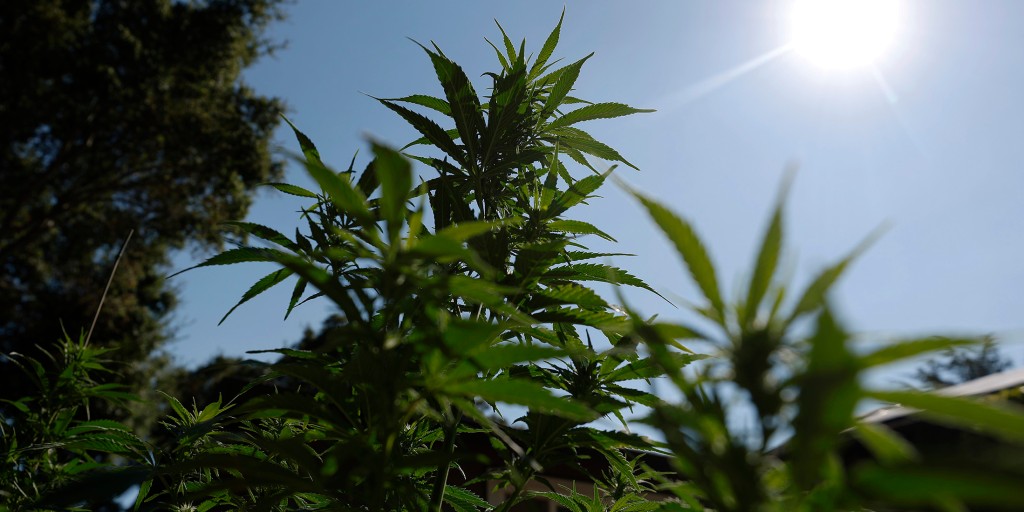
Federal Reclassification Aims to End Cannabis Banking Struggles
For years, licensed cannabis dispensaries across the U.S. have operated on a cash-only basis due to federal regulations that make it nearly impossible to access traditional banking services. Despite state-level legalization for medical or recreational use, cannabis companies have remained financial outcasts—unable to accept credit or debit cards and denied access to loans and other banking tools.
This could soon change. President Donald Trump has issued an executive order directing the Department of Justice to fast-track the reclassification of cannabis under federal law. The proposed change would shift cannabis from a Schedule I substance, grouped with drugs like heroin and LSD, to Schedule III, aligning it with medications such as anabolic steroids and Tylenol with codeine.
Why Schedule III Matters
Schedule I substances are defined as having no accepted medical use and a high potential for abuse, making them illegal to manufacture, possess, or distribute. Cannabis’s current classification has long hindered scientific research and economic progress for the industry. Reclassifying it to Schedule III would acknowledge its medical potential and significantly ease financial restrictions.
The primary aim of the reclassification is to boost research into medical marijuana and CBD therapies. But the ripple effects could be transformative, offering access to electronic payment systems and traditional lending options for cannabis businesses.
The Realities of a Cash-Only Industry
Elad Kohen, CEO of The Flowery—a cannabis company operating 26 stores in Florida and New York—knows the risks of operating in cash all too well. Employing around 600 people, his business still can’t process card payments due to federal restrictions.
“You’re dealing with paper, which makes you a target,” Kohen said, highlighting the safety concerns for dispensary employees. “Most of the time they rob you for cash, not for product.”
Financial experts believe that reclassification could bring legitimacy to the industry in the eyes of banks and investors. Amiyatosh Purnanandam, a finance professor at the University of Texas at Austin, explained that with a digital paper trail, cannabis businesses would appear more credible, unlocking access to loans and other financial services.
Billions at Stake
The cannabis industry generated an estimated $30 billion in retail revenue last year and supported over 400,000 jobs, according to industry research. The Pew Research Center estimates there are nearly 15,000 licensed dispensaries across the country. Yet, banks remain hesitant to serve the sector.
“We are not asking for anything special other than being treated like a normal company,” said Kohen. “We want the ability to raise capital, fund research, and access financial services like any other business.”
Obstacles in the Banking Sector
Despite the potential benefits of reclassification, banks face significant hurdles. Purnanandam outlined three major concerns: legal uncertainty, unclear collateral value, and suspicion of illicit activity. All of these factors discourage banks from engaging with cannabis companies.
“Banks don’t want to deal with the conflict between state and federal laws,” he said. This legal ambiguity also affects payment processors, which fear the reputational and legal risks associated with handling cannabis transactions.
Collateral is another issue. In the event of a loan default, cannabis-related assets could be difficult to liquidate if they are still considered proceeds of a federal crime. “The value of that collateral drops significantly in the eyes of the bank,” added Purnanandam.
Tax Inequities and Legislative Pushback
Beyond banking, cannabis companies face higher tax burdens. Because they are ineligible for federal tax credits and deductions, their effective tax rate can be much higher than other businesses of similar size.
“If we could access the same tax treatment, it would bring in a lot of responsible capital,” Kohen said. “That would add legitimacy to an industry that desperately needs it.”
However, not everyone supports easing the financial burden on cannabis businesses. In February, Sen. James Lankford, a Republican from Oklahoma, introduced a bill aimed at blocking tax deductions and credits for cannabis companies.
The Hidden Costs of Compliance
Another challenge is the high cost of regulatory compliance. Because cannabis revenue is still considered potentially illicit, banks are required to file Suspicious Activity Reports (SARs) for each transaction involving a cannabis company. These reports are time-consuming and expensive, often requiring extensive due diligence to ensure legality.
Peter Su, a cannabis banking consultant, emphasized the operational burden in a Rolling Stone essay. “How does a financial institution miles away from a dispensary ensure its client isn’t selling to minors?” he asked. “The answer is intensive, ongoing monitoring. This goes far beyond glancing at a business license.”
Changing the Narrative
For Kohen and many others in the industry, the most significant impact of reclassification might not be financial at all. “It’s the beginning of the complete change of the stigma around cannabis,” he said.
While the road ahead remains complex, the reclassification of cannabis from Schedule I to Schedule III could mark a turning point. It offers the possibility of financial normalization for an industry long forced to operate in the shadows, and it could unleash new growth, innovation, and legitimacy across the board.
This article is inspired by content from Original Source. It has been rephrased for originality. Images are credited to the original source.