

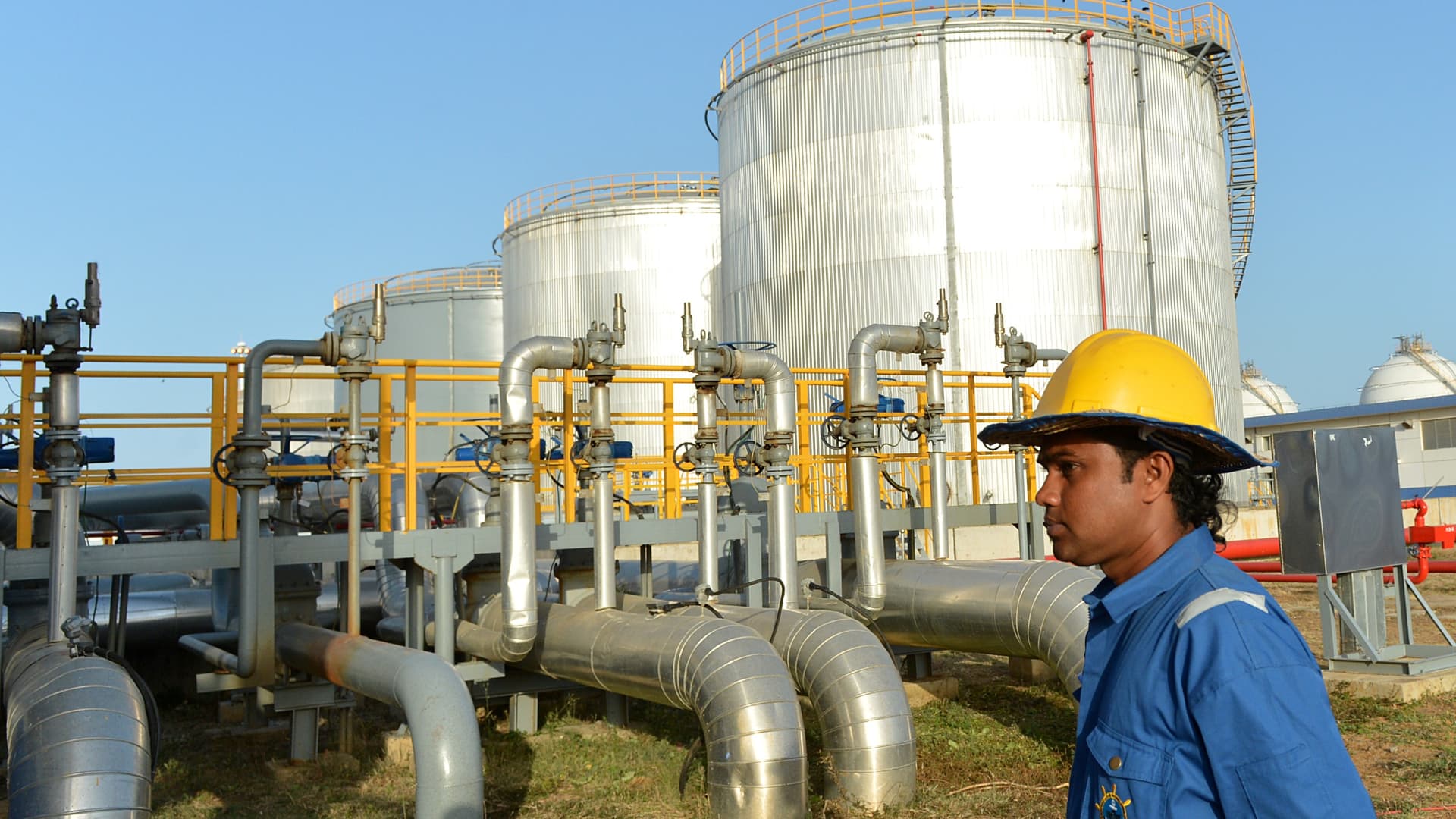
Introduction: Asia Faces New Oil Shock
The recent Iran oil shock has jolted Asian economies, raising concerns about a possible repeat of the 1997 Asian Financial Crisis. As surging energy prices and weakening currencies grip the region, many are searching for signs that history may repeat itself. However, leading economists argue that today’s environment is vastly different, and the lessons learned from the past have fortified Asia’s financial systems. This article explores the impact of the Asia oil shock, the region’s economic resilience, and why a 1997-style crisis is unlikely.
Parallels to the 1997 Crisis: Superficial or Significant?
On the surface, the economic landscape across Asia bears some resemblance to the turmoil of 1997. Currencies are under pressure, energy costs are soaring, and governments are deploying emergency measures to cushion their economies. Countries like Thailand are rationing gasoline, while the Philippines has declared a national emergency due to rising fuel prices. Inflation and widening trade deficits evoke memories of the late 1990s crisis, but economists stress that the core drivers of today’s Asia oil shock are fundamentally different.
David Lubin, a senior research fellow at Chatham House, points out that the 1997 crisis was fueled by fixed exchange rates, large short-term foreign debts, and dangerously thin reserves. “These days, Asian economies – precisely because of the legacy of the late-1990s crisis – are much better protected,” he notes. The region’s financial architecture now boasts deeper local markets, broader domestic investor bases, and far less reliance on short-term foreign funding.
Financial Shock vs. Physical Shock
According to Brad Setser of the Council on Foreign Relations, the 1997 crisis was a financial shock—capital inflows dried up, currencies collapsed, and defaults spread rapidly. In contrast, the ongoing Asia oil shock is a physical or supply shock, primarily driven by an effective blockade of the Strait of Hormuz, which has restricted about one-third of the region’s oil supplies. As a result, fuel prices for diesel and jet fuel have soared, and shortages are rippling through Asian economies.
Unlike the late 1990s, today’s Asian economies have built up substantial foreign exchange reserves. South Korea’s reserves, for instance, now exceed $400 billion compared to just $30-40 billion three decades ago. India holds about $688 billion, and other nations like Indonesia, the Philippines, and Thailand also possess much larger buffers. These reserves offer central banks the ability to stabilize their currencies and absorb shocks without resorting to aggressive interest rate hikes or currency pegs.
Exchange Rate Reforms and Resilience
Another key difference separating the present from the past is the move towards more flexible exchange rates. Dan Wang, China director at Eurasia Group, highlights that most Asian currencies are now allowed to move more freely, which means they can gradually weaken to absorb external pressures rather than collapsing abruptly. This flexibility reduces the risk of a systemic crisis triggered by speculative attacks on currency pegs.
Moreover, the existence of ample reserves in markets like Thailand and the Philippines has allowed policymakers to avoid drastic interventions. While the risk of stagflation—where inflation rises even as economic growth slows—remains, the region’s financial system appears intact and more robust than in the late 1990s.
Stagflation Risks and Regional Variations
Despite the region’s improved resilience, the Asia oil shock is not without consequences. The prolonged Middle East conflict and resulting energy shortages have increased the risk of stagflation, particularly in oil-dependent economies like Indonesia and the Philippines. Fiscal space is also tighter due to higher levels of public debt, limiting the ability of governments to roll out large-scale subsidies or stimulus packages.
Nonetheless, capital flows remain relatively stable, with no evidence of a broad-based capital flight. Some countries, such as Malaysia, Singapore, and China, are less vulnerable thanks to their current-account surpluses, strategic reserves, and diversified energy sources. Singapore, in particular, stands out for its diversified economy and strong institutions, while Malaysia benefits as an energy exporter with continued investment inflows.
Global Implications and Market Adjustments
Experts warn that the oil shock’s effects could spill beyond Asia, impacting global bond markets and emerging market currencies. If tensions escalate in the Strait of Hormuz, oil prices could surge, forcing central banks to sell U.S. Treasurys to defend their currencies. Yet, capital flows are now more market-driven and less destabilizing than in the past, and absent are the extensive currency mismatches and lack of transparency that defined the 1997 crisis.
The Lesson of 1997: Buffer Building Pays Off
The aftermath of the Asian Financial Crisis led to decades of prudent financial management and buffer-building among Asian policymakers. Today, those reserves and reforms are being put to the test by the Asia oil shock. While the situation is challenging, most economists believe that the steps taken since 1997 have significantly reduced the risk of another systemic meltdown.
Ultimately, the key question is how long the current supply shock will last and whether energy shortages can be resolved before inflicting more severe economic damage. As Rob Subbaraman of Nomura Bank warns, a prolonged crisis could still harm the global economy, especially if geopolitical tensions escalate further. Nonetheless, Asia’s greater resilience and flexibility suggest that history is unlikely to repeat itself in the same way.
This article is inspired by content from Original Source. It has been rephrased for originality. Images are credited to the original source.