

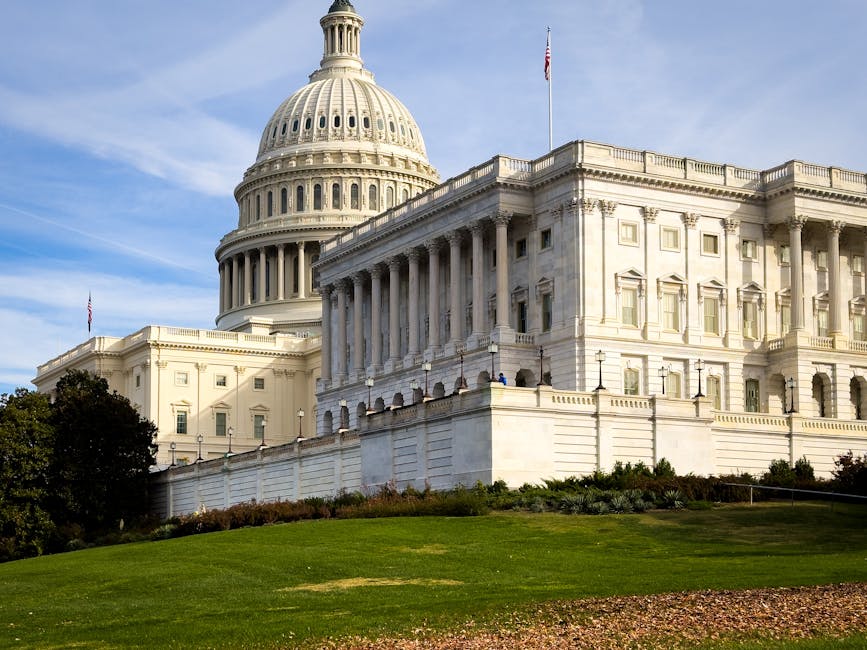
Congress Considers Overhaul of Financial Data Privacy Rules
The debate over financial data privacy is heating up in Washington, as lawmakers consider the first major update to the Gramm-Leach-Bliley Act (GLBA) in over 25 years. The GLBA, originally enacted in 1999, remains the primary federal law governing how financial institutions collect, use, and protect consumers’ sensitive information. However, as the financial system evolves—with the rise of digital banking, data aggregators, and fintech firms—many experts and legislators believe the law needs significant modernization to address new risks and consumer expectations.
Why Financial Data Privacy Reform Matters
According to a recent Congressional Research Service (CRS) report, Congress is weighing competing interests as it seeks to overhaul the nation’s financial data privacy framework. The United States still lacks a single, comprehensive federal law for data privacy and protection. While the GLBA sets minimum standards, states are free to enact stricter rules. This patchwork approach has led to inconsistencies and confusion for both consumers and financial institutions operating nationwide.
At the heart of the debate is whether a new federal standard should preempt state privacy laws. Some lawmakers argue that a uniform national standard would offer clarity and stronger protections for all Americans, while others worry it could weaken privacy rights in states with more robust safeguards.
Key Proposals: The GUARD Financial Data Act
Congressional interest has recently focused on giving consumers more control over their financial data privacy. In April, leaders from the House Financial Services Committee introduced the GUARD Financial Data Act (H.R. 8398) as part of a broader bipartisan push for data privacy reform. This proposed legislation would amend the GLBA to:
- Limit financial institutions’ data collection to what is “adequate, relevant, and reasonably necessary” for providing a product or service.
- Require data aggregators and third-party providers to notify consumers and offer an opt-out option before using their login credentials to access financial accounts.
- Make GLBA Title V a uniform national standard for financial data privacy and security, preempting certain state laws.
- Expand disclosures about how financial data is used and require affirmative consumer consent before collecting or sharing sensitive personal information.
- Give both current and former customers more access to their data and the ability to request deletion, subject to certain exceptions.
A similar proposal, H.R. 1165, was advanced in the previous Congress but ultimately did not become law. That bill also aimed to expand privacy protections and create a nationwide standard, while limiting states’ ability to impose additional requirements.
Modernizing Data Privacy for a Changing Financial Landscape
The push for financial data privacy reform reflects significant changes in how financial information is handled. Today, data aggregators and fintech firms play an increasingly central role in processing and storing customer information—often beyond the scope of traditional banks and financial institutions. This evolution raises new questions about what types of entities and data should fall under the GLBA and how consumers can control access to their information.
The CRS report highlights that these changes are a driving factor behind Congress’s renewed focus on updating the financial privacy framework. Lawmakers are keen to ensure that the rules keep pace with technological advancements and the growing complexity of the financial sector.
The Central Policy Trade-Off: Federal vs. State Regulation
One of the most contentious issues in the financial data privacy debate is the balance between federal and state authority. Proponents of a uniform national standard argue that it would provide clear, consistent protections for consumers and easier compliance for businesses. Opponents warn, however, that federal preemption could erode stronger privacy measures already in place in states like California and New York.
The current legislative proposals seek to address these concerns by setting a high bar for privacy protections while clarifying the roles and responsibilities of financial institutions, data aggregators, and technology providers. Still, the debate over whether to allow states to exceed federal standards remains unresolved.
The Road Ahead for Financial Data Privacy Reform
As Congress continues to debate the future of financial data privacy, the stakes are high for both consumers and the financial industry. The GUARD Financial Data Act and similar reforms could fundamentally reshape how financial data is collected, shared, and protected nationwide. Whether lawmakers can strike a balance between robust consumer protections and a workable regulatory framework remains to be seen.
What is clear is that the modernization of financial privacy laws is more pressing than ever, given the rapid evolution of financial technology and the increasing value—and risk—of personal financial information in the digital age.
This article is inspired by content from Original Source. It has been rephrased for originality. Images are credited to the original source.